Friday, January 14, 2022

POLITICAL CARTOONS part 8: RICHARD THOMPSON

In my opinion, there are only two reasons why Richard Thompson isn't celebrated as one of the greatest political cartoonists.  

The first is that he devoted most of his time and energy to other artistic pursuits--  his popular comic strip, paintings, illustration art, a weekly gag panel, etc.

The second is that Parkinson's disease cruelly robbed him of his drawing ability while he was still young, and he tragically passed away at age 58.  

Nevertheless, looking back at Thompson's political cartoons, it's clear he was an artist of enormous gifts.  

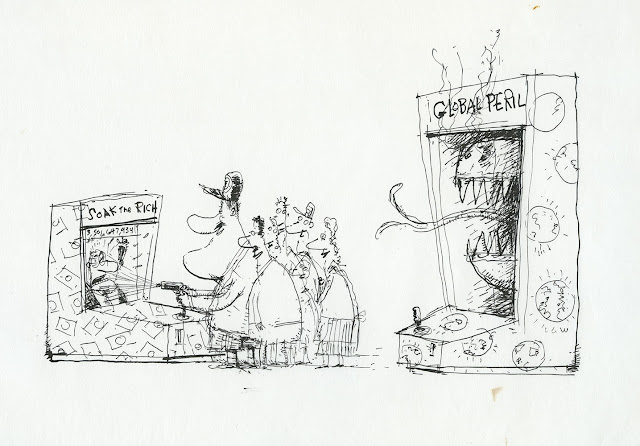
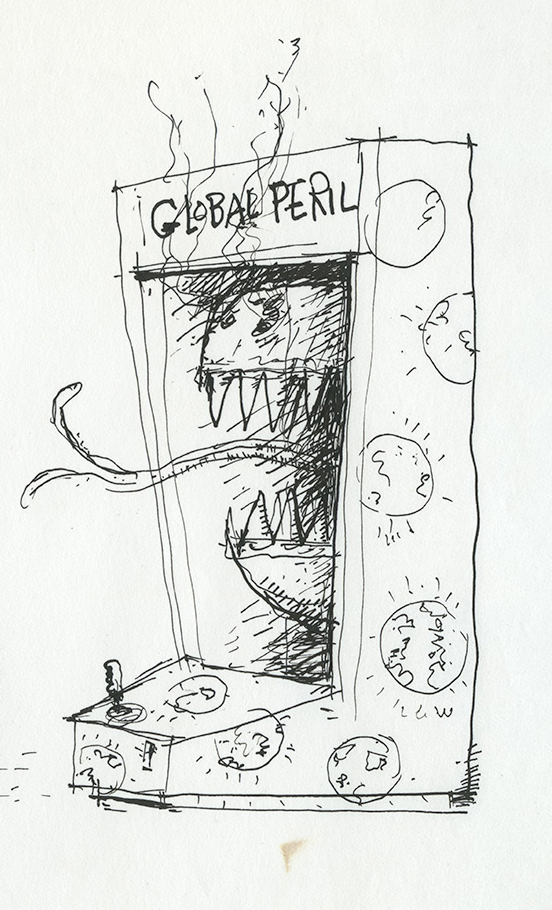
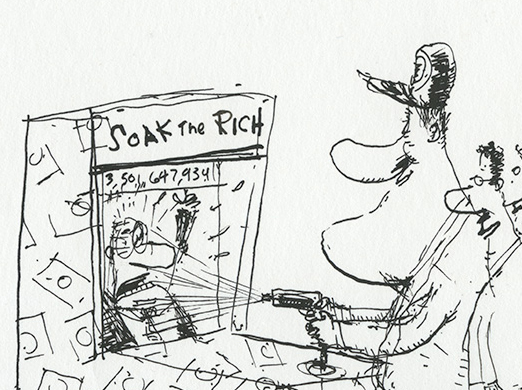
Here we see President Clinton entertaining the crowds with the game, "Soak the Rich." Meanwhile the "Global Peril" game is crawling out of its container unnoticed.   


Thompson's breezy, child-like scrawl is built upon an architectural
engineer's solid understanding of the forms he was drawing.


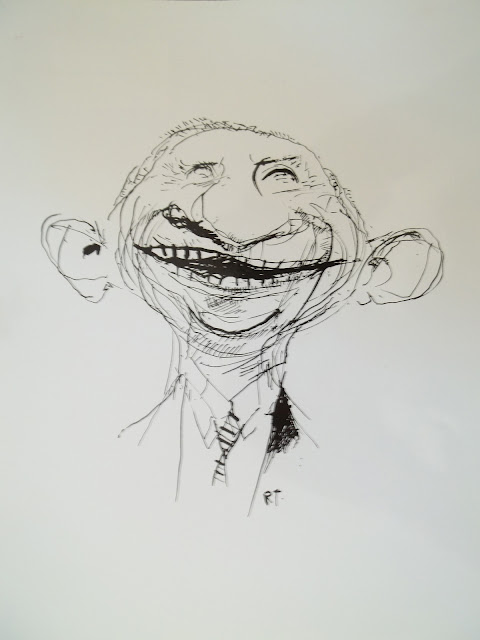
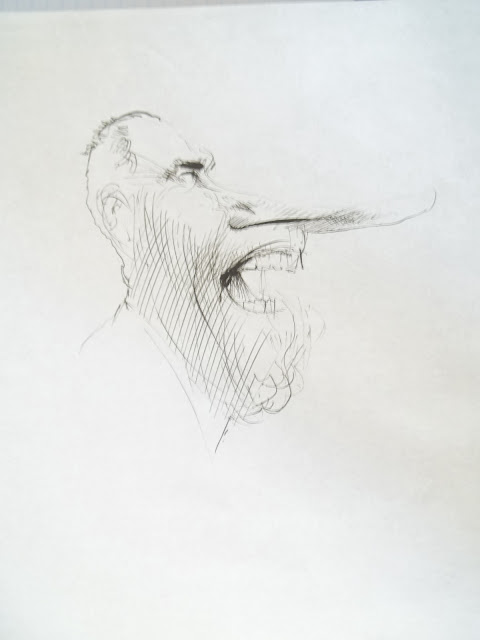
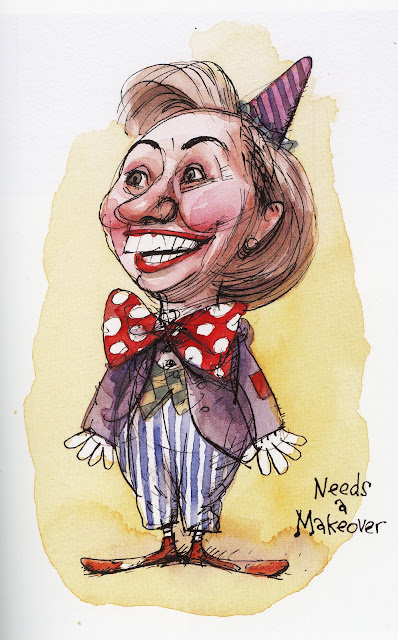
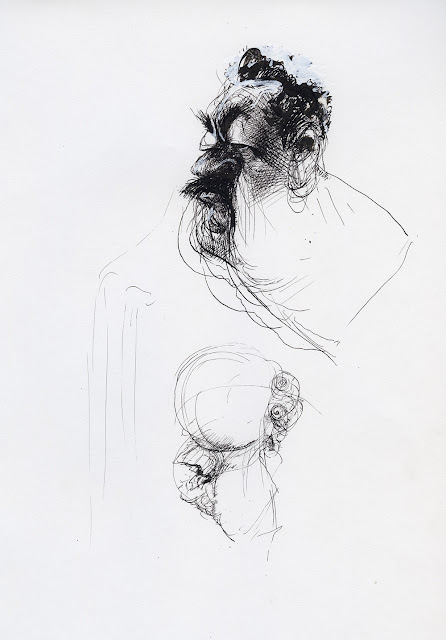
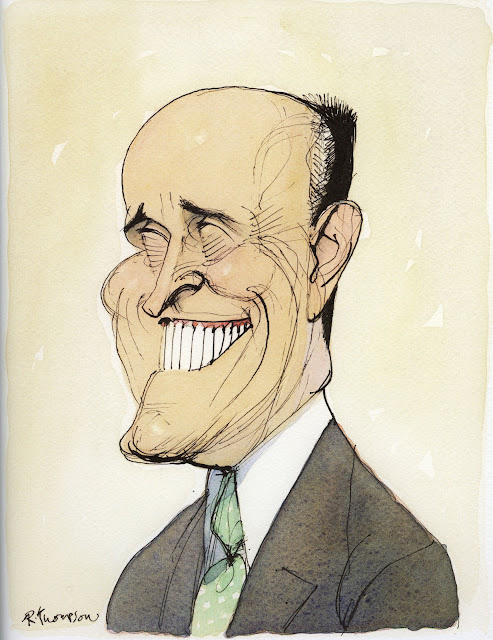
Thompson's caricatures of presidents and presidential candidates are sheer poetry:

Ross Perot


Richard Nixon


Hillary Clinton


Saddam Hussein


Rudi Giuliani in an earlier era

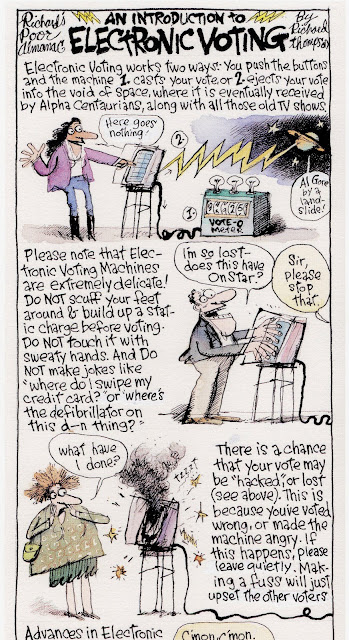
For his weekly panel, Richard's Poor Almanac, Thompson wrote the text accompanying his drawings: 


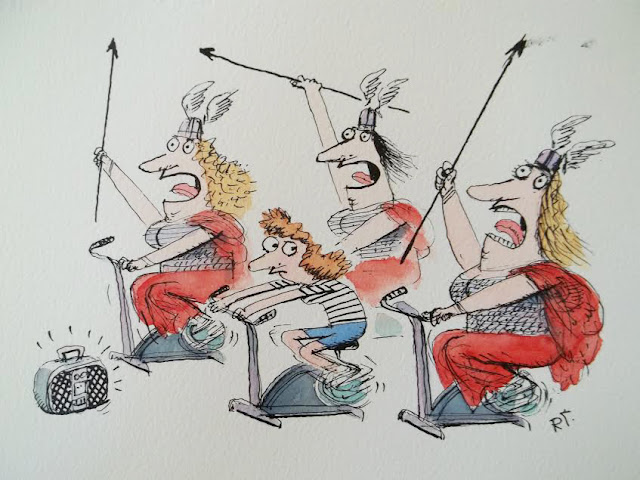
Even his apolitical cartoons often contained clever social commentary:  


Thompson's political cartoons amounted to only a tiny percentage of his total work, but based on the brilliance of that work, Thompson remains firmly among my favorite political cartoonists. 

Friday, January 07, 2022

POLITICAL CARTOONS part 7: JEFF MACNELLY


Everyone recalls that Jeff NacNelly was a great political cartoonist, but once in a while it's good to look again and remind ourselves how truly great he was.


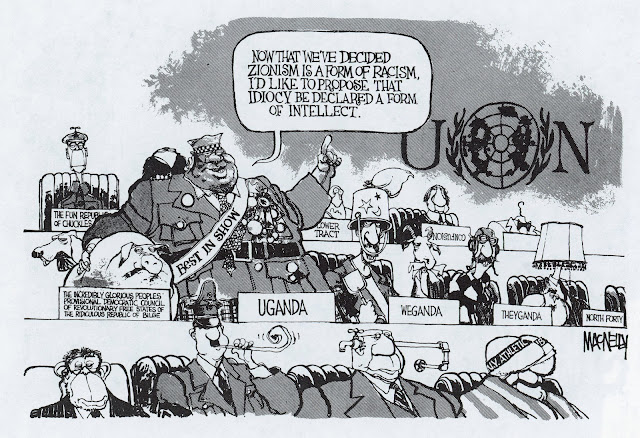
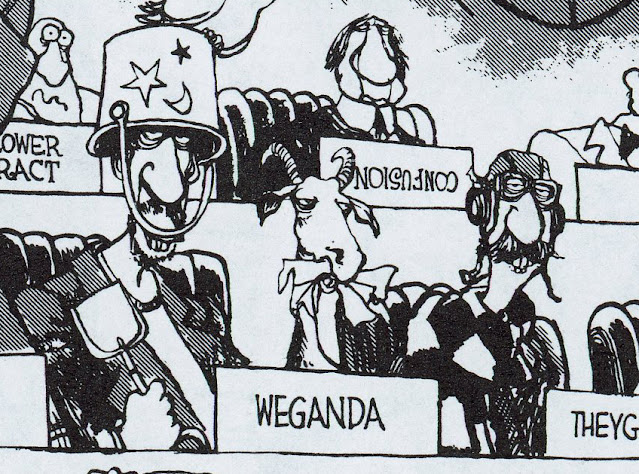
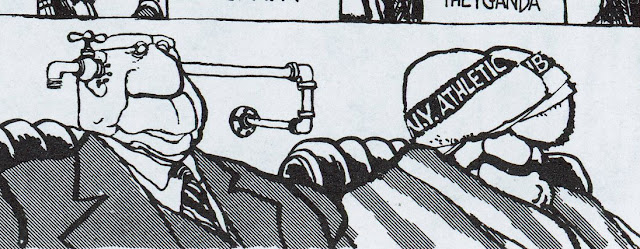
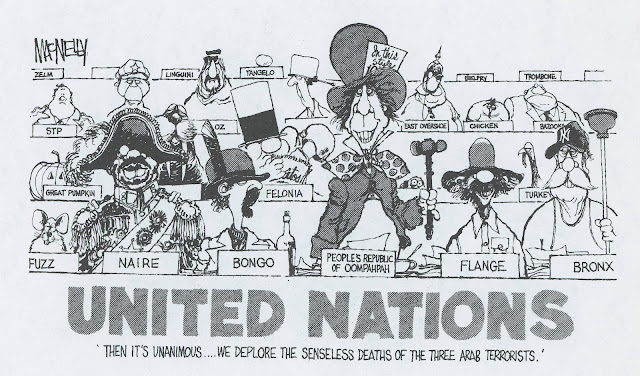
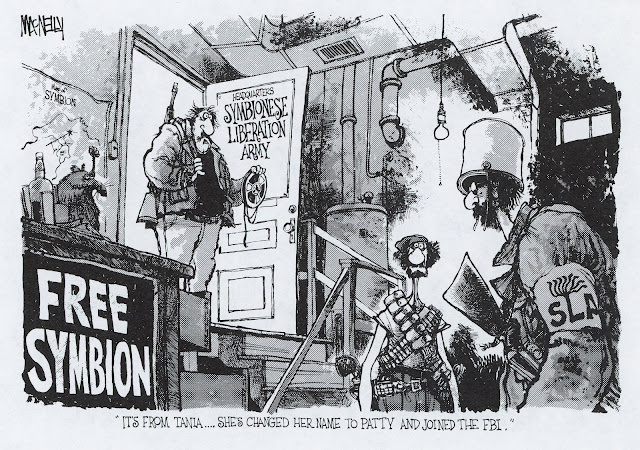
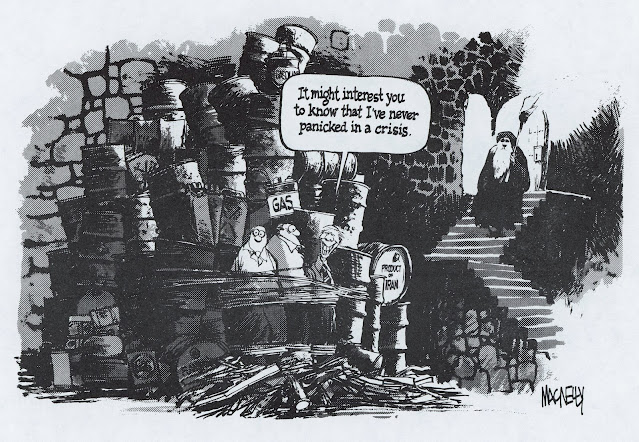
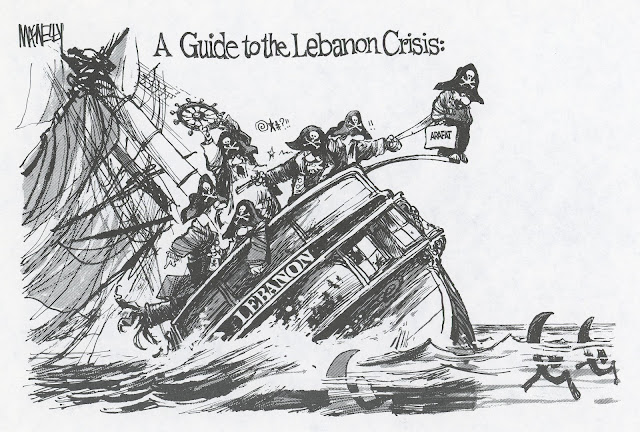
MacNelly had a special gift for portraying collections of morons-- a handy talent for political cartoonists.  


He presents the most complex scenes with ease: elaborate architectures from difficult angles, rooms full of people in dynamic poses, complicated machines.  


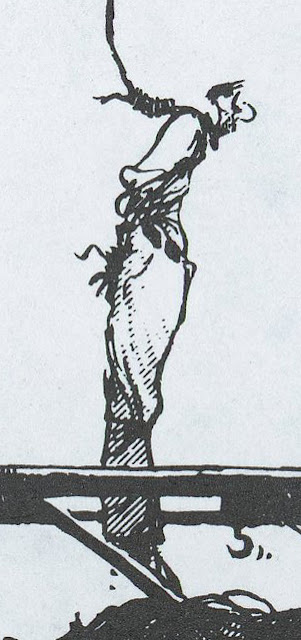
But as long as we're revisiting MacNelly's talent, let's put aside his obvious showy talents and consider a different standard: the way he handles a tiny sketch of an individual.  For example, look at the way he draws a dissident on the gallows:


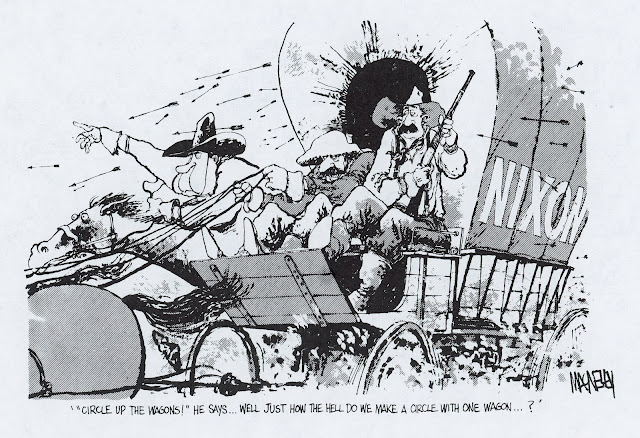
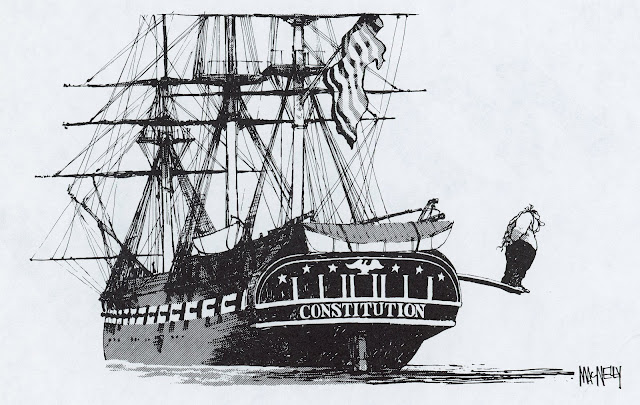
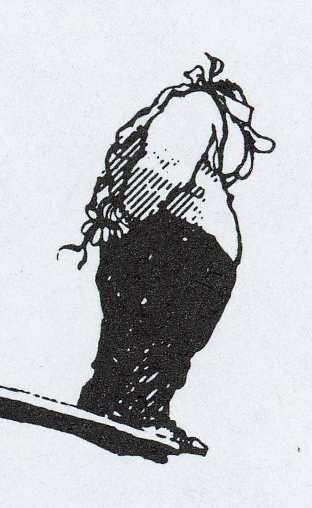
Or in the following cartoon, note his tiny drawing of President Nixon walking the plank: 


Without bells, whistles or pyrotechnics, these simple treatments of a single human form are incredibly revealing.  It would be easy for a cartoonist to handle these tiny images as stick figures.  Many cartoonists today would.  But MacNelly's sensitive, descriptive line captures important observations about posture, stance, paunch, clothing.  Note the sagging belt and pants on the malnourished Iranian dissident.  MacNelly noticed and drew the puffed out knees on Nixon's pants, or the shoes that project out over the edge of the plank.  Note, too, the anatomical liberties MacNelly took with the way Nixon's head fit into his shoulders.

MacNelly's wonderful talent shows up even in the tiny, humble corners of his drawing. 


Friday, December 31, 2021

THE END OF 2021

 As 2021 draws to a close, it's time for us to face another end.


Brian Bolland

I want to wish each of you a happy, healthy 2022. Despite the dangers that continue to confront us, I'm sure we can prevail if we're willing to work together and employ Wonder Woman's lasso of truth.


Sunday, December 26, 2021

POLITICAL CARTOONS part 6: ANN TELNAES

Ann Telnaes, winner of both the Pulitzer Prize and the Reuben award, achieves a distinctive look by blending her skills as a political cartoonist with her background as an animator. (She worked at Disney as well as at animation studios in Los Angeles, New York, London, and Taiwan).

Here are four ways I think her talents combine to make her work so exceptional:

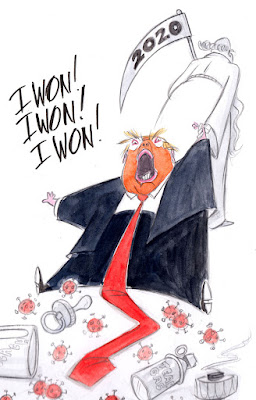
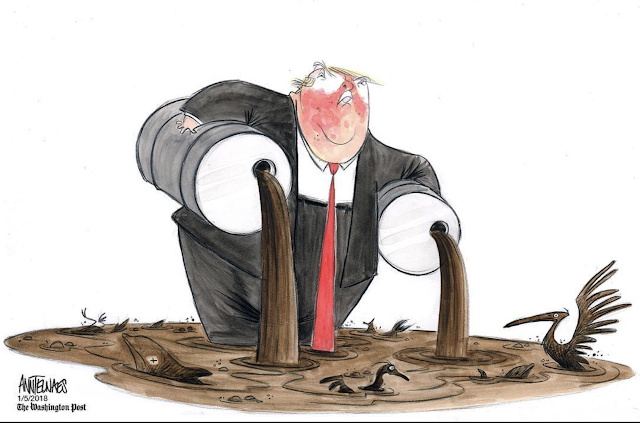
1.)  Telnaes speaks with a strong, clean line in the tradition of Robert Osborn.  An animator's craft doesn't allow for second thoughts, asterisks and footnotes.  There's no cross hatching in animation. Telnaes chooses her best line and commits to it. 

White space is expensive in a newspaper but it's also valuable to a drawing

By sweeping away the clutter and simplifying her forms, she sacrifices explanatory backgrounds and similar crutches, but note how her use of white space strengthens her compositions and projects her ideas more forcefully.
 

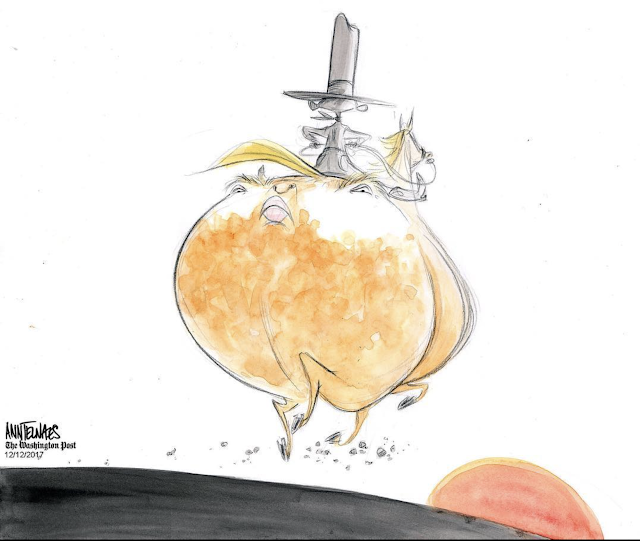
2.)  Telnaes also brings an animator's plasticity to her subjects.  Look at how extreme and cartoonish she's willing to go with this horse's ass, contrasted with its tiny legs, or that ridiculous hat:


Telnaes is able to get away with this kind of extreme exaggeration only because she has the drawing talent necessary to hold the picture together.

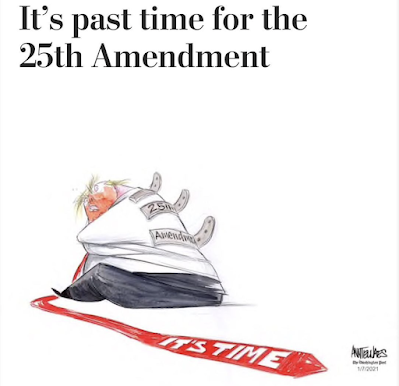
She similarly makes full use of an animator's license by simplifying figures into geometric shapes.  I've previously written about this rubbery trapezoid Trump...


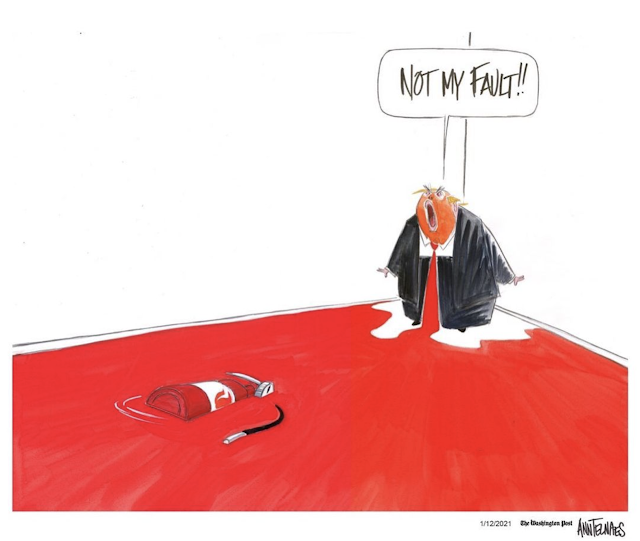
Her characters frequently take their strength from circles, triangles and other basic archetypal shapes.


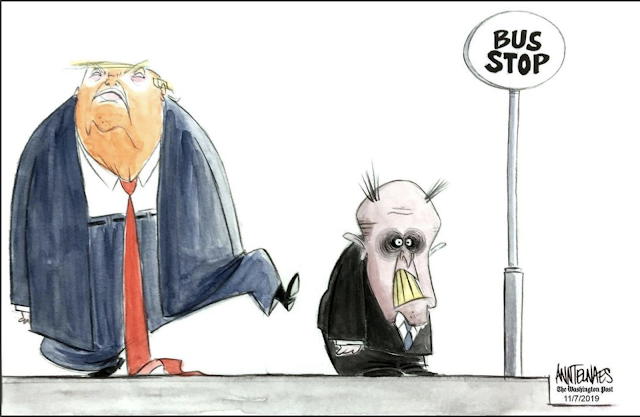
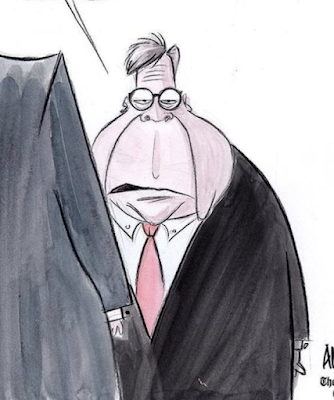
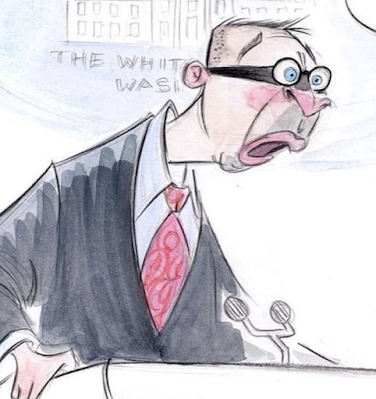
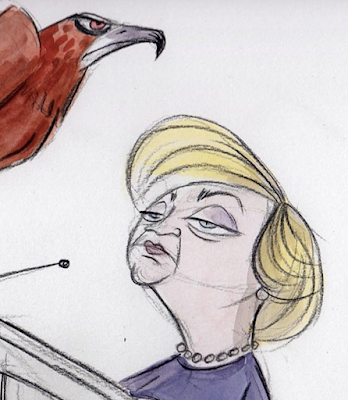
3.)  Her caricatures, however caustic, have an animated cartoon quality to them.  I love her Rudi Giuliani...


Or this devastating Bill Barr...


...or Mick Mulvaney...


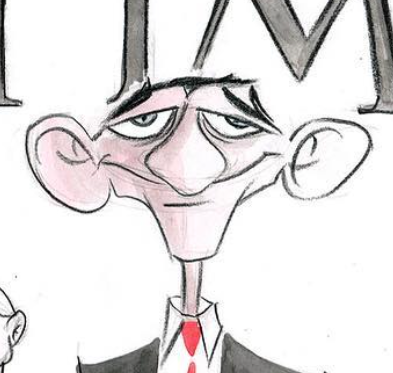
... and a handful of others:


A caricature of Jeff Sessions, more brutal than a drawing of his face

The creativity, drawing ability and political judgment in these faces are good examples of what I think caricature is about.


4.)  Finally, as a former animator Telnaes has pioneered the introduction of animated GIFs into political cartooning.  Her use of GIFs to portray an animated bobble head doll of Mike Pence , or the dynamics of the balance of power in the Supreme Court or a Trump Paddle ball  are not just superfluous gimmicks, but are integrated into the meaning of the cartoon and enhance the presentation in a way that a static drawing could not.  Another way in which the medium benefits from merging two strengths. 

Saturday, December 18, 2021

POLITICAL CARTOONS part 5: MIRKO ILIĆ

So far this series on political cartoons has focused on artists I admire for their hand drawn line. In the process, I've said some unkind things about the misuse of digital art tools. But of course digital tools in the right hands can create powerful, important, beautiful political images.

Mirko Ilić is off the beaten path from the other artists in this series, but his work is so strong I feel the path should be re-routed to go past his door.

I met Ilić in 2013. I had just finished a rousing discussion with Milton Glaser about art and he said, "You know, you should really meet Mirko. He's right upstairs." I'd never heard of Mirko, but when Glaser picks up the phone and tells someone you're coming, you don't say no.

"Mirko" turned out to be the co-author with Glaser of a book about social and political graphics, and a formidable talent in his own right.


Ilić was born in Bosnia and attended art school in Zagreb.  His first work was as a cartoonist and illustrator, drawing innovative and politically active pictures for Yugoslavian and other European magazines.


Mirko Ilić on terrorism

Soon he was working internationally for magazines such as Heavy Metal and Marvel's Epic Illustrated. He moved to New York in 1986 where he worked for many of the top publications.


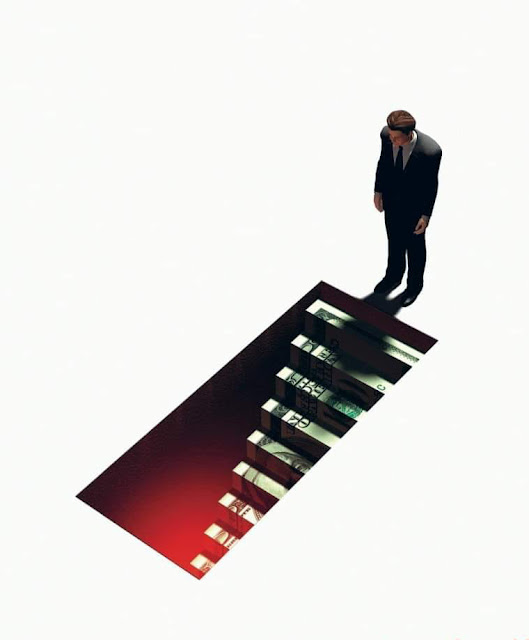
He continued to grow, and in In 1995 he founded Mirko Ilić Corp., a graphic design and 3-D computer graphics studio. Since that time, he has produced bold, imaginative and significant images which have received numerous awards. His work is represented in the Smithsonian Museum and the Museum of Modern Art in New York.


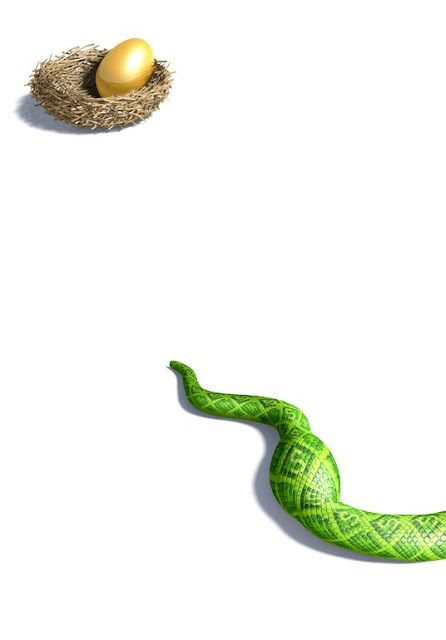
Fraudsters who pilfer your nest egg


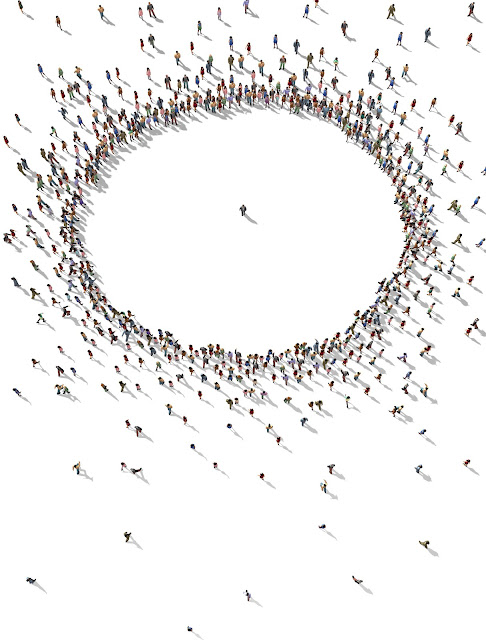
Tribalism


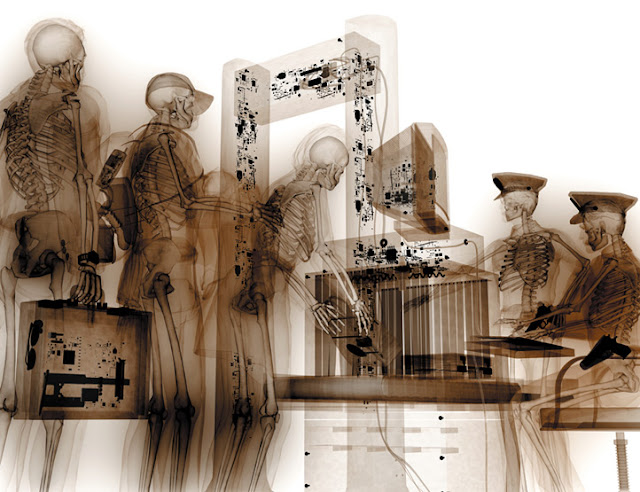
The scope of airport surveillance

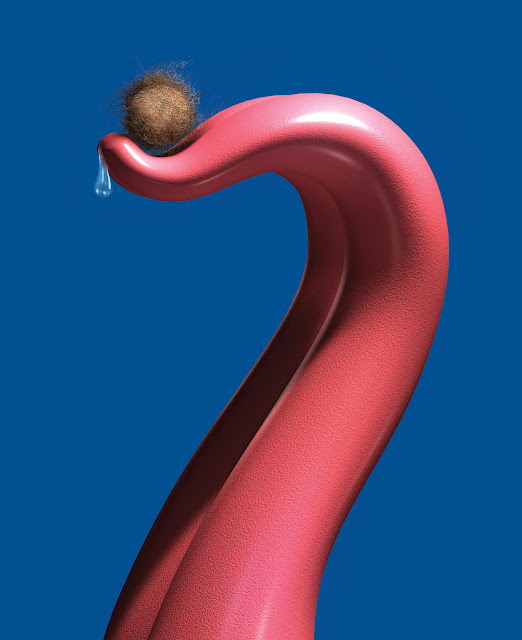
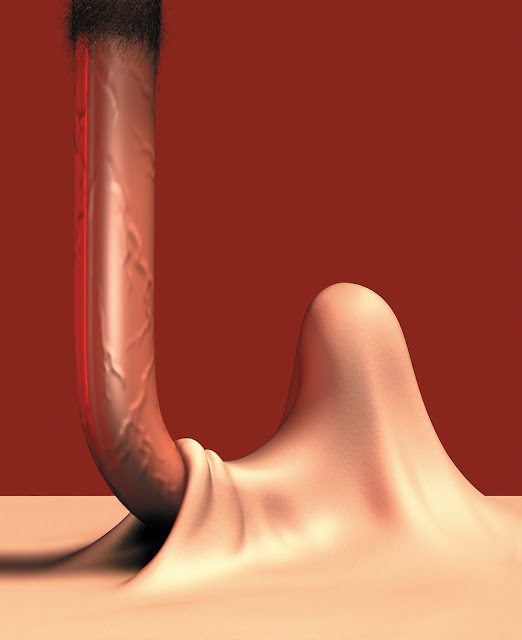
While some artists use the computer as a crutch to simulate realism, Ilic uses the computer to transform the attributes of realism into wildly imaginative and creative images.  These are award winning images from a series on Sex and Lies.


Monday, December 13, 2021

POLITICAL CARTOONS part 4: MICHAEL RAMIREZ

 As far as I can tell, Michael Ramirez can draw any damn thing he wants.

I mean that in both senses: he can get away with almost any concept and he has the drawing ability to execute that concept.

Ramirez seems unfazed by regular death threats in reaction to his controversial cartoons.  He notes that his first death threat came from his parents when he told them he was giving up plans for medical school to become a political cartoonist. 

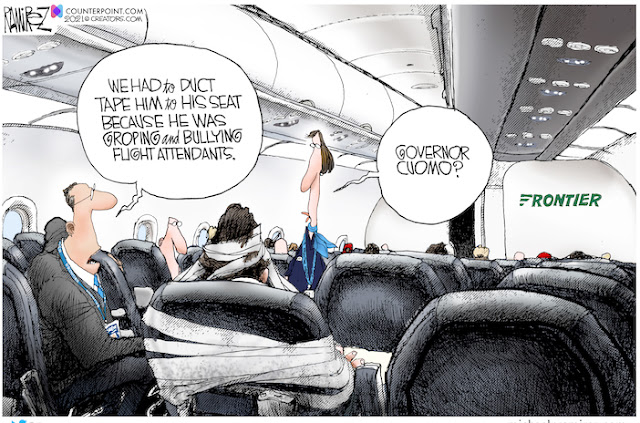
But more importantly for the purposes of this blog, Ramirez seems able to capture any subject he chooses.  For example, he can beautifully draw the perspective inside a confined plane cabin, if that's what his idea calls for...

 
... but at the same time, he can effectively draw perspective in the wide open sky outside.


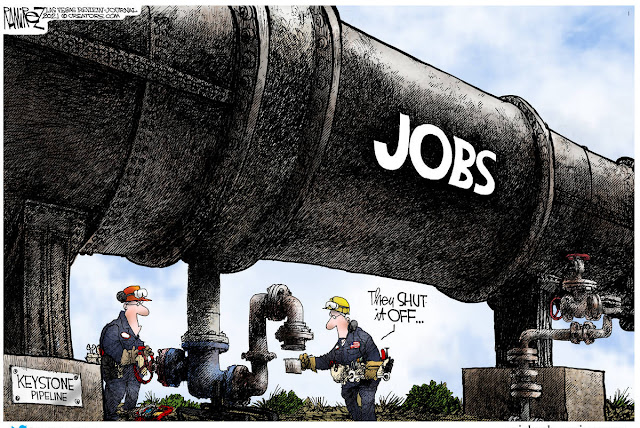
He's great at capturing heavy industrial structures...


...as well as small technological gadgets:


He is fearless about drawing from any angle...


... or taking on historical and anthropological themes:

 
When you ask Ramirez how he was trained to draw such a diverse array of subjects, he responds, "I was always curious about how everything works.... I like breaking the pieces down, finding out the components, how everything works, and then putting them back together." That instinct, combined with a natural talent for recreating whatever he saw, accounted for the vast majority of his art training.

Ramirez says he may have 15 ideas a day and writes them down on cocktail napkins or other stray bits of paper to keep track of them.   


Sometimes when he has a little too much time on his hands, he will draw something fanatical like this:


But this tight, trompe l'oeil drawing is not what impresses me most about his work.  I'm more impressed by pictures like the following, where Ramirez simply drew two backsides against a sky. 
 

 95% of today's political cartoonists, if they had the courage to attempt such an angle, might draw these backs as two rectangles.  Notice how Ramirez infuses character into these backs, to make the drawing work-- the sagging, weary shoulders, the stylized, leaning bodies with their foreshortened heads and big butts-- these weren't taken from a photograph or learned in an anatomy class.  The variety of the linework adds volume, the contrast between the blue and white is very effective, and the whole drawing is staged thoughtfully-- for example, Uncle Sam respectfully takes off his battered hat and places it on his knee.  A lot of nice visual touches contribute to the message of the cartoon. 

Thousands of cartoonists have drawn thousands of grim reapers, yet when it's Ramirez's turn, he puts aside the cookie cutter and makes a fresh effort to produce something worthwhile.
 
Unlike the super-realistic door lock and wood grain in the cartoon above,  in this next cartoon, Ramirez takes liberties with the human form.  Uncle Sam has an impossibly high waist and gorilla length arms.  These exaggerations help meld the two figures together.  For me, these types of drawings work better than intense realism. 


Well known for his conservative views, Ramirez says, "People know philosophically where I stand... but people are drawn to the visual medium, and if you can make it interesting enough, they'll sneak a peak.  Then you've got 'em."