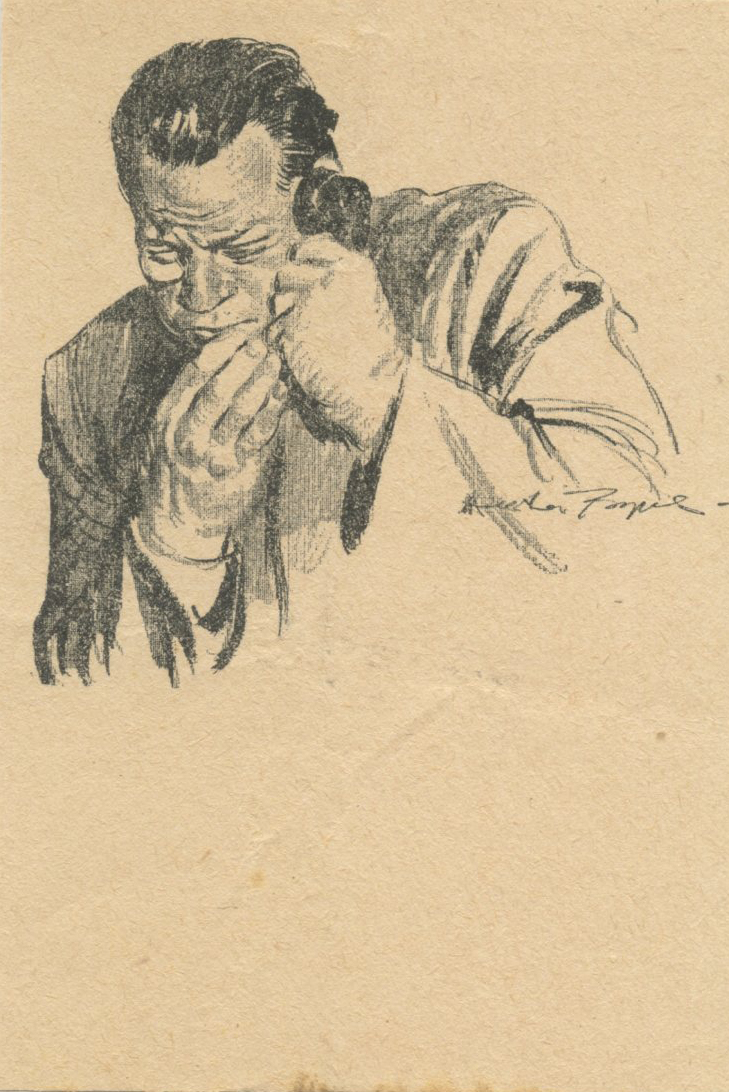
Artist Robert Crumb stumbled into the perfect sweet spot.
If he'd been born a few years earlier, he would've been censored, jailed or burned at the stake. If he'd been born a few years later, during the era of MeToo and Black Lives Matter, his work would've been shunned.
If he'd been less crazy, his art wouldn't have stood out. If he'd been crazier, he might've followed his brothers into dysfunction and suicide. Instead, he found the perfect middle ground for a productive and lucrative career.
If Crumb started a few years earlier, art directors would've dismissed him for his lack of technical skill. Fortunately for Crumb, the illustrators who immediately preceded him fought to open popular taste to naive and crude drawing, placing a premium on personal authenticity and eccentricity. Fine artists who preceded him legitimized comic art and pop art, creating an upward path for Crumb from underground comics.
Crumb wasn't the only oddball artist to benefit from the climate of the 1960s. The new combination of rock music and psychedelic drugs produced an entire school of poster artists who, in another era, might have trouble finding gainful employment.
I was thinking about this as I read the tributes to artist Ron Cobb, who passed away last week. Cobb, too, benefited from that moment of artistic ferment in California.
Cobb was a California high school student who loved to draw. After high school he worked as a mailman before being drafted to Vietnam. When he left the army he returned to a home transformed by mid-60s craziness. Writer and friend R.H. Fischer reported:
The Vietnam war was less traumatic than was his vast leap out of Army life (structured and predictable) into the great unknown that was Bohemian Hollywood in the early sixties.
One sign of the big shift was the emergence of underground newspapers, such as The Los Angeles Free Press which was launched by an unemployed tool-and-die worker and former organizer for the Socialist Workers Party. Cobb wandered in the door and became their resident cartoonist. The street paper became a success and within 5 years Cobb's left wing editorial cartoons were syndicated in 90 newspapers. The 60s revolution, flower power, radical politics and the summer of love swept across the nation, planting Cobb's cartoons in previously establishment publications.

But that wasn't the end of it. In the 1970s, a lot of creative energy shifted to making science fiction and fantasy films. The screenwriter for the film Alien lived near Cobb and happened to see him drawing a space ship for an album cover for the rock group Jefferson Starship. He drafted Cobb to work on the movie-- a job which led to Cobb's involvement with Star Wars and Conan the Barbarian.

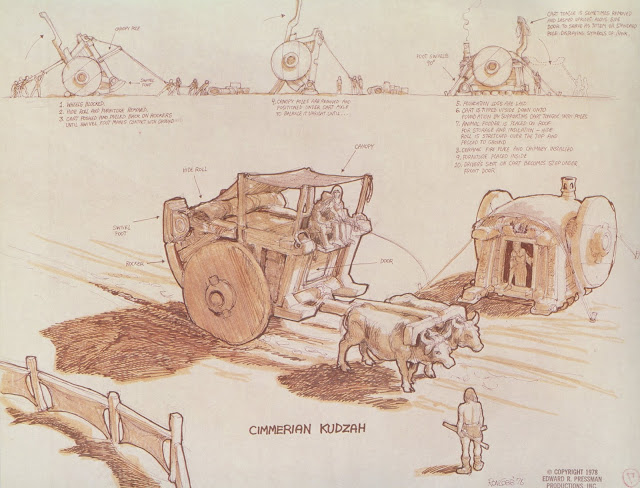
While he worked on Conan, Cobb ran into a young Steven Spielberg working down the hall. Cobb's drawing impressed Spielberg who suggested that Cobb direct his next movie about people who have a close encounter with extra terrestrials. Not bad for a middling high school student who liked to draw.
In short, the 1960s created an artistic interregnum, when artists who might normally live and die in caves on the outskirts of town were free to wander the newly vacated corridors of power in the town center. They could even occupy the city hall where Norman Rockwell once reigned.
All the forces of nature and the marketplace seemed to combine to create a sweet spot for unconventional talents and eccentricities. Robert Crumb's weird masturbatory fantasies sold for millions of dollars and transported him to a chateau in France. Stoners and druggies achieved lasting fame with their psychedelic posters. And Cobb, the unschooled Army vet had the opportunity to apply his unorthodox creative visions to shape some of the biggest films of the century.