Sunday, June 23, 2024

ONE LOVELY DRAWING, part 74

 I can't tell if this drawing by Tom Fluharty makes me laugh because it's so funny, or because I'm so happy that human beings are still capable of drawing like this.

Ace Frehley, guitarist from the group Kiss

Look at the marvelous assortment of talents that combine to create this image of a saggy, jowly, dissolute rocker.  Fluharty even makes those sunglasses sag:


Fluharty devised his own patented technique for scratching sharp highlights in his blue pencil series of drawings.  He used that technique effectively here to draw scraggly hairs on the top of the head.  It contributes to the character, but note that Fluharty resists the temptation to overdo it with too many individual hairs; he selectively isolates one long greasy hair scratched across the middle of that dark lens (high contrast) to give those wilted sunglasses additional prominence.  

Also, without Fluharty's understanding of anatomy, those exaggerated rolls of flab melting down Frehley's face wouldn't look nearly so believable.

Pudgy fingers like turkey drumsticks, wearing oversized jewelry,
reinforce our impression of aged debauchery. 


A thrusting pelvis comes across more comical than dangerous when paired with a pot belly... that moth eaten costume that was once cool...  Fluharty doesn't miss a trick.  He is a great storyteller with a pencil.


Sunday, June 16, 2024

A FADED BOB PEAK

In 1957 two brothers, Bob and Joe Switzer, patented a new chemical process for manufacturing colors that seemed to glow. They combined fluorescent dyes with a new class of polymers, then milled the result to produce brilliant pigments. The brothers founded a company that would later be known as the Dayglo Color Corp.

In 1959, Tide Laundry detergent became their first commercial customer.


But within two years, graphic designer Bob Peak had discovered the paints and used them as rocket fuel.
Bob Peak's ad for 7up combined the new colors with cinematic speed effects,
bold angles and slashing lines

Peak set the graphic arts world ablaze in the early 1960s.  But some things are too hot not to cool down; like uranium that has passed its half life, the radioactive colors used in some of those early paintings no longer radiate so intensely.  This enables us to re-approach the art and analyze the old fashioned drawing underneath.

Bob Peak's 7up ad today

It turns out that the drawing is pretty darn good.  It is inventive yet confident.  Like so much art that seems wild and spontaneous, beneath the surface it is carefully controlled.


Peak's illustrations wonderfully embodied an exciting moment in time:  the radioactive colors of the atomic age, the supersonic speed of the space age, the "intensified" new laundry detergent, and a visual sense that incorporated what the camera lens taught the naked eye about reality.

By the 1950s photography had moved past Muybridge

Underneath the dayglo colors, Peak made images that were every bit as museum worthy as the paintings of Diebenkorn.


Today people continue to invent new pigments, including the new blackest black discovered at MIT, using an arrangement of carbon nanotubes, known as S-VIS.  

Where is this generation's Bob Peak, ready to make bold new use of the new pigments and similar new tools?

Wednesday, June 12, 2024

MAD MAGAZINE EXHIBITION AT THE ROCKWELL MUSEUM

Fans of the art of MAD shouldn't miss the first comprehensive museum exhibition of MAD art, on display from June 8 through October 27 at the Norman Rockwell Museum.  Anyone who is not a fan of MAD art  should see the exhibit to learn why they're mistaken.

Room after room is densely packed with beautiful originals from the classic years of MAD.  


Collectors of MAD art joined with MAD artists and writers to assemble many of the greatest hits, providing a rare opportunity to see decades of quality art as it should be seen.  Harvey Kurtzman, Jack Davis, Will Elder, Wally Wood, Paul Coker Jr., Don Martin, Frank Frazetta, Mort Drucker, Sergio Aragones up through Herman Mejia, Drew Friedman, Chris Payne, Sam Viviano, Tom Richmond and Richard Williams... they're all here, displayed in an excellent, thoughtful exhibition which gives these talents the recognition they're due.    

MAD and all related elements TM and copyright EC Publications.  Courtesy of DC.  All rights reserved.  Used with permission. 

Yes, that's a page from the classic Superduperman in the upper left corner.  MAD and all related elements TM and copyright EC Publications.  Courtesy of DC.  All rights reserved.  Used with permission. 

One of my favorite Wally Wood stories. MAD and all related elements TM and copyright EC Publications.  Courtesy of DC.  All rights reserved.  Used with permission. 


An entire room full of Mort Drucker originals!

The Rockwell Museum is the only institution in the world that could team Richard Williams' parody of a Norman Rockwell cover with the original cover itself:

Comparing the two paintings side by side is an education.  MAD and all related elements TM and copyright EC Publications.  Courtesy of DC.  All rights reserved.  Used with permission. 

Years ago, the dedicated followers of MAD grew up to become corporate CEOs, civic leaders, internationally renowned directors, hedge fund billionaires, great scientists, doctors and lawyers.  Wherever life took them, no matter how respectable they became, they still carried the germ of MAD within them.  Today those fans walk the most prestigious halls of power while MAD itself remained behind, a childhood artifact, printed on crummy paper and sold "cheap" at the corner newsstand.  It's long overdue for MAD to catch up.  


____________________________________

Full disclosure: I served as an advisor on this exhibit, which was co-curated by Stephanie Plunkett and Steve Brodner.

Thursday, June 06, 2024

AT THE STARTING LINE WHEN THE GUN WENT OFF

In the mid-19th century, a wave of technological advances swept huge new powers into the laps of illustrators. For over a century, illustrators used those powers to create magical images for mass audiences. 

By the end of the 20th century, that wave was moving on, depositing those powers into new laps– – the laps of film makers, video gamers, digital artists, animators. 

The places illustrations once dominated–- books, magazines, newspapers – were fading away. The money that once fueled illustrations migrated to the internet. The huge popular audiences that were dazzled by the arrival of illustrations in the 19th century were now ensorcelled by virtual reality phantoms and pictures that moved, talked and glowed, sparking with new kinds of color.

But at the beginning-- when images could be accurately and inexpensively reproduced on paper and widely distributed for the first time--  a huge economic transformation took place.  In 1857 a publisher complained, "The illustration mania is upon our people.  Nothing but illustrated works are profitable to publishers."  

No artist was better positioned at the starting line than the great Gustave DorĂ©.  A talented, ambitious, prolific visionary, he took full advantage of the new opportunities and became probably the most famous artist in the world during his lifetime.  In the early formative years of modern illustration he changed the nature, the social status, and the economics of illustration for the next century. It would be a huge mistake to forget about him.

Before George Lucas, Peter Jackson and James Cameron, Doré thrilled the world by demonstrating that the most extravagant, epic, mind blowing images could be achieved with a simple black line on white paper.


Sunday, May 26, 2024

NUDE ART CRITICISM


When Cy Twombly's painting,  Say Goodbye, Catullus, to the Shores of Asia Minor (1994) was exhibited in Houston, a visitor to the museum was so moved by the painting that she took off her clothes and danced naked in front of it. She later wrote, “The painting makes me want to run naked."

When Clyfford Still's painting, 1975-J, went on display in Colorado...

 
... a visitor to the museum was so affected by the painting that she pulled down her pants, rubbed her bare bottom up against the painting and slid her way down to the floor (where she urinated).

I agree with their judgment that the Twombly painting is superior to the Still painting.  Nevertheless, we shouldn't overlook the fact that nude criticism suffers from some inherent ambiguities and is therefore susceptible to being misconstrued. 

For example, a young woman critiqued Gustave Courbet’s infamous 1866 painting L’origine du monde, by hoisting her dress up above her waist and sitting on the museum floor in front of the painting with her legs spread. (NSFW).


Her action may have sensitized some visitors to the oppressive colonialist patriarchy responsible for such paintings.  However, a disturbing percentage of the crowd seemed to miss the point entirely, and happily applauded or pulled out their cameras.

Perhaps for this reason, the woman felt it necessary to return to the old fashioned written word, going back to the museum to deface the painting by scrawling "Me too" on it.


Art criticism written in words has a more direct, literal meaning than symbolic nude criticism.  It eliminates a lot of ambiguity.  But of course, ambiguity can be a desirable thing when the critic is a nitwit.  


Saturday, May 18, 2024

ILLUSTRATING THE END OF THE WORLD

Once upon a time, magazines had such high budgets for illustrations that they could commission illustrators to muse about the end of the world. 

For example, Life magazine paid artist Rockwell Kent to imagine four different scenarios for the end of life on earth.  Life's editors explained that an artist's interpretations "suggest reality much more forcefully than a scientist's six-lettered formula:"


The loss of heat

The loss of gravity

Collision with a meteor


Solar flares

Coronet Magazine commissioned a similar set of speculations from illustrator Chesley Bonestell:


In the years following these illustrations, scientists discovered that the universe is expanding at an increasing pace, which points to a totally different ending.  It now seems that the universe is likely to dissipate to a state of maximum entropy-- a cold, empty void where individual subatomic particles become so spread out they will no longer be capable of sustaining life or heat.  In the distant future, form will no longer exist. 

Fortunately, today's illustrators are up to the challenge of illustrating a formless, empty void.  Some publications now substitute photographs for illustrations, but wish to imply that human creativity continues to play a role in the process.  To achieve this result, they add pointless random squiggles around the photograph.


These are excellent illustrations of the dissipation of form at the end of the world.


Friday, May 03, 2024

JOSEPH CLEMENT COLL: THE ENEMY OF CROSS HATCHING

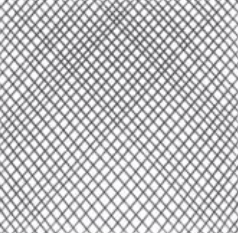
I've said some unkind things here about cross hatching-- those intersecting lines that are used to add tone to a drawing.


Artists who aspire to something higher use line more descriptively, to add dimension, contribute vitality, describe form, or make some other kind of artistic statement.  Cross hatching, like stippling, is the kind of busy work that might be delegated to an apprentice, or even replaced by zipatone.

To illustrate my point, look at what the brilliant Joseph Clement Coll did where lesser artists might have used cross hatching.


Compare the vigor in these details (blown up larger than the orignals) with the quiescence of regular cross hatching.  Even when we step back and can no longer detect these tiny details, the whole drawing remains infused with energy:


In a generation of great line artists, Coll was one of the best.