Wednesday, September 27, 2006

SORRY, BUT MY RHINOCEROS DROWNED

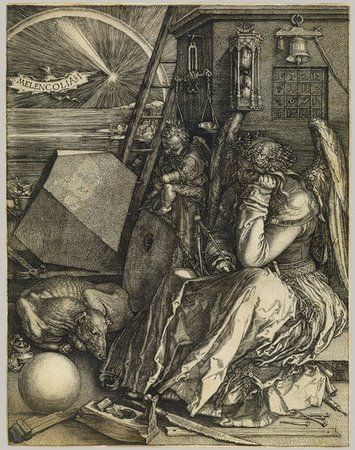
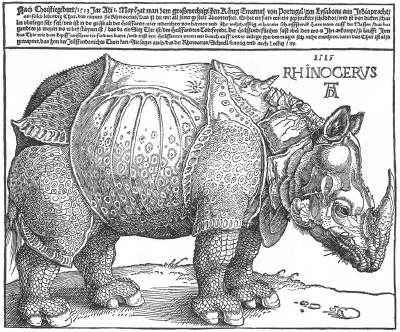
Artists are most creative when they have to explain a missed deadline or a mistake in their artwork. This honorable tradition of excuses goes back as long as there have been artists. One of the best excuses came from Durer, an early illustrator.


The year was 1515, at the dawn of the Age of Exploration. Western civilization was awakening from centuries of medieval sleep, turning from superstition to the Scientific Revolution and the Renaissance. Durer was tasked with drawing a rhinoceros but unfortunately, nobody had ever seen a rhinoceros in Europe. It was an almost mythical beast described by travelers from exotic lands.

Explorers captured a rhinoceros in the far jungles of India. They strapped the great beast into a ship and sent it back to Europe. It was on its way to Italy, a gift to Pope Leo X, when the ship went down at sea.


What could Durer do? He never got to see the rhinoceros, so in the time honored tradition of illustrators everywhere, he faked it from a description and from a sketch in a letter. His drawing (above) was inaccurate in many ways but there was no one to contradict him, so Durer's drawing established the European concept of a rhinoceros for the next 250 years.

I sometimes think about that primordial beast, plucked from its home in the jungle and carried off to a new world. It was destined to become the most famous rhinoceros in history, although that wasn't much consolation when that storm came up at sea. The ship sank, taking the poor, uncomprehending beast down to a watery grave.

Western civilization would eventually improve its technique for studying wildlife. But in 1515, when cultures didn't quite come together-- when the past didn't quite connect with the future, east didn't connect with west, faith didn't connect with rational inquiry-- there stood an illustrator astride the cultures, bridging the gap.

Saturday, September 23, 2006

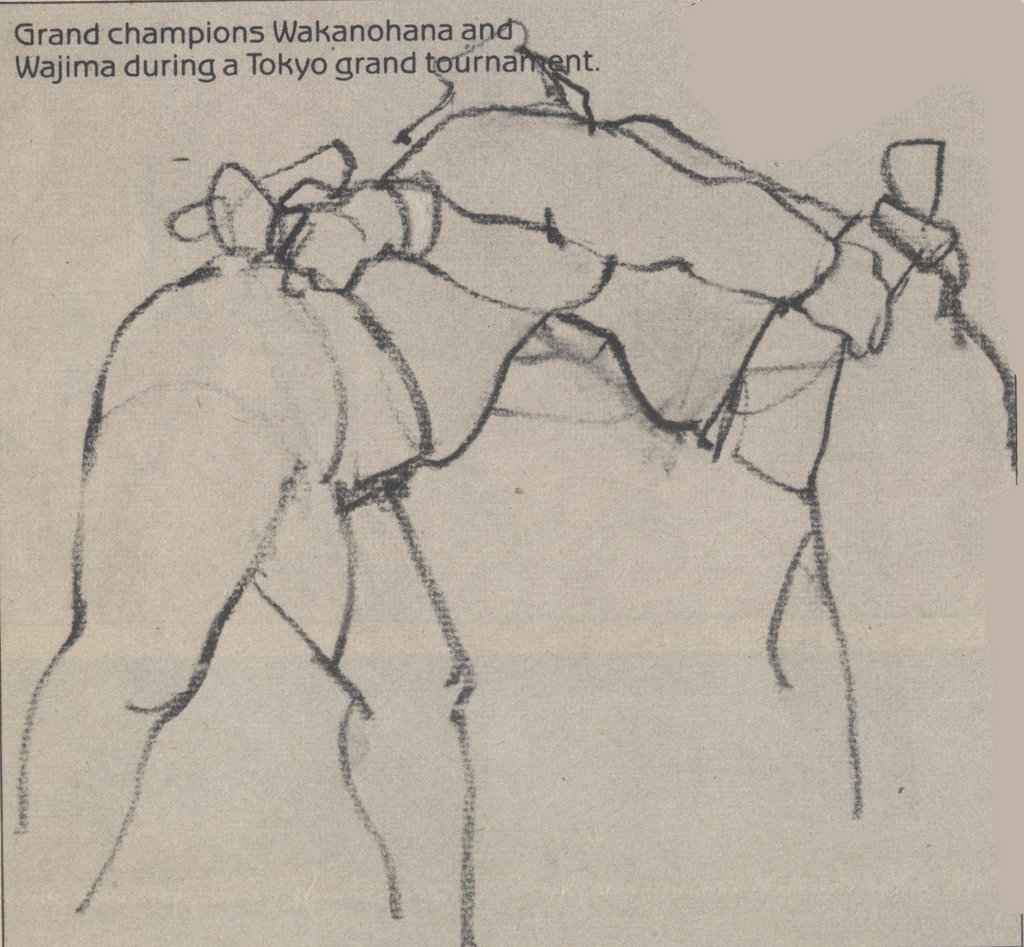
THE TRIBUTE OF A SIGH

In 1748, Thomas Gray stood alone at dusk in the crumbling remains of a small cemetery in the English countryside. He thought about the generations sleeping beneath the moss-- farmers and plowmen from humble villages where fame or fortune never visited. Soon the ivy would cover the last vestiges of their time on earth.

Gray wrote a beautiful
Elegy to these "unhonored dead" who have no monuments to commemorate their lives. He reminds us:
Perhaps in this neglected spot is laid
Some heart once pregnant with celestial fire.
Their neglect, says Gray, is the way of the world:

Many a flower is born to blush unseen
And waste its sweetness on the desert air.

I think of Gray's elegy when I turn the yellowed pages of old magazines or newspapers and see the valiant work of thousands of now forgotten artists: staff artists for newspapers, draftsmen working in the bullpens of commerical art studios, freelancers eking out a living. Much of their art is best forgotten, but many of these artists were great. They remain anonymous today for reasons unrelated to quality-- born too soon, born too late, drank too much, or perhaps just never caught that lucky break.


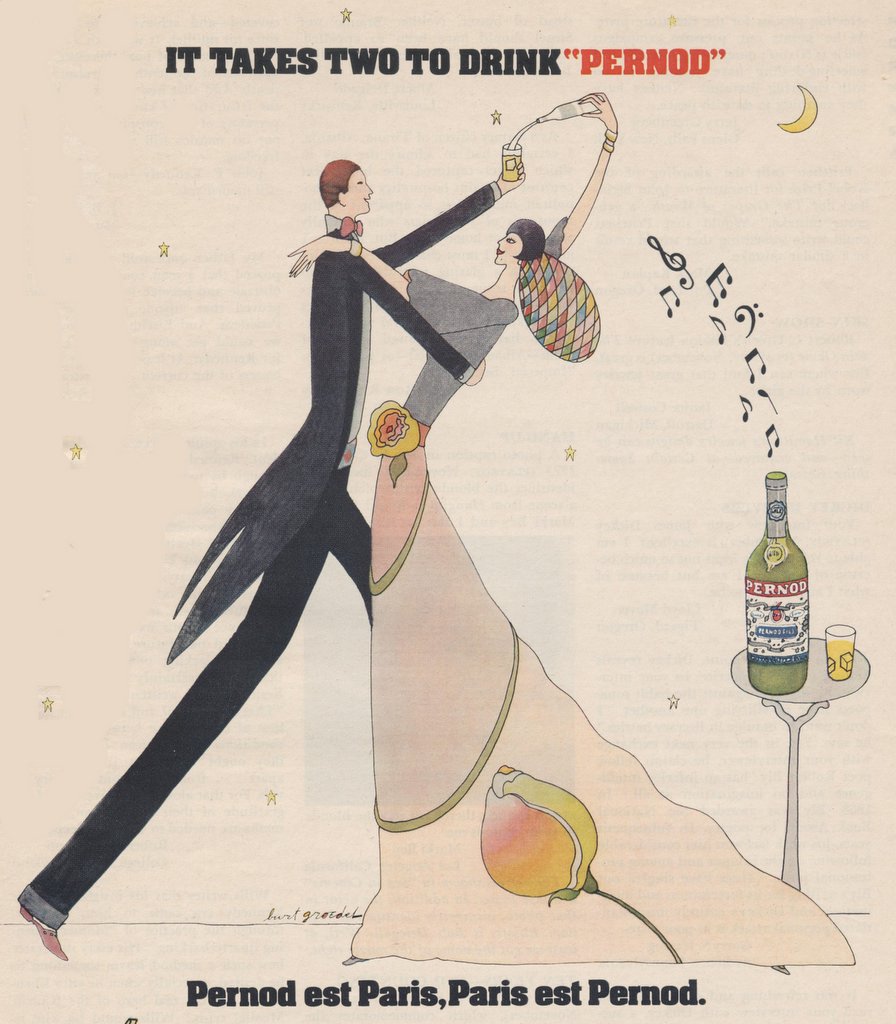
Before long, these brittle pages will turn to dust. The beautiful work of these artists will be remembered for only another generation or two by their families before passing on to obscurity. I have no idea how many of these artists are still alive, or what became of them, but I am posting a token handful of commendable drawings so the internet might rescue them from undeserved obscurity.


Gray wrote that in the absence of grand memorials, those who came before us at least deserve "the passing tribute of a sigh." I agree, and this is my sigh for these and other commercial artists who labored so hard in the name of excellence.


Saturday, September 16, 2006

ARTISTS IN LOVE, part five

The meanest illustrator who ever lived was surely James Montgomery Flagg, who was always quick with an unkind remark.

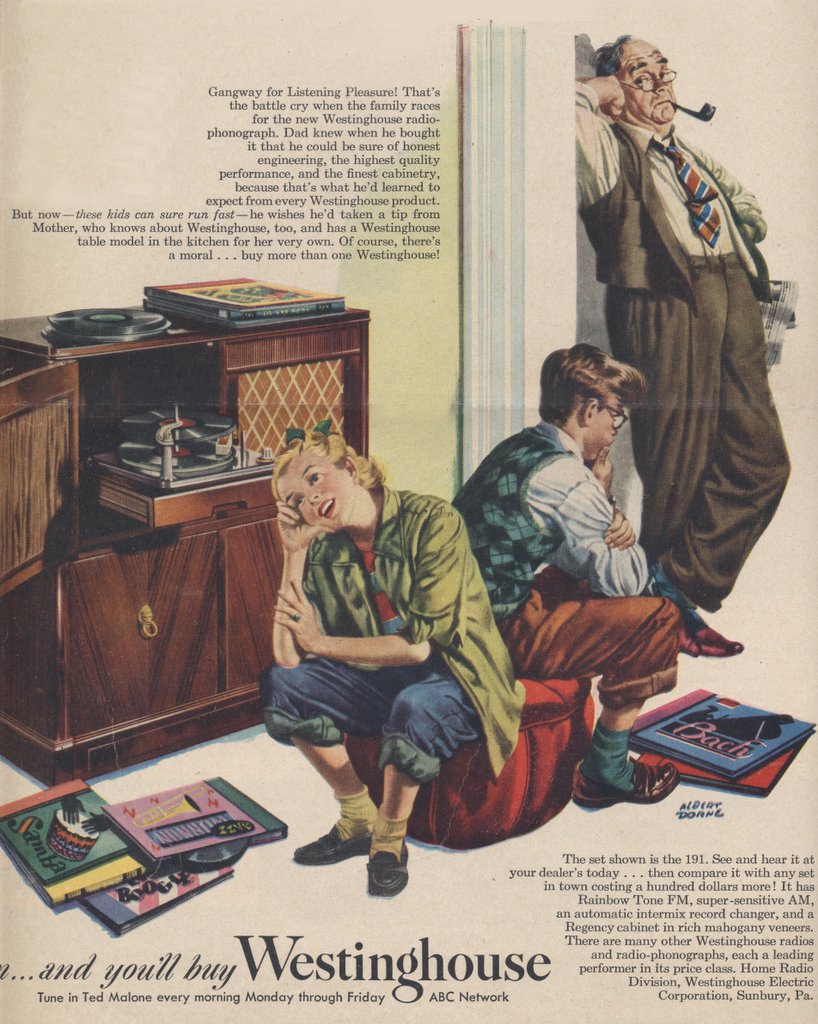
Flagg's autobiography makes fun of the contrast between illustrator Albert Dorne and Dorne's wife. According to Flagg, Dorne's wife was beautiful, petite and elegant while Dorne looked like a brute who might murder you in a dark alley.


It's true that Dorne carried the psychic scars from his childhood in the slums. He had to scratch and claw his way out of Hell's Kitchen not only for himself but for his mother, his two sisters and his younger brother. He worked as a boxer and dealt with terrible situations that, in his own words, left him "hard boiled." Not surprisingly, he became a heavy drinker with a difficult personality. He rapidly went through three marriages.

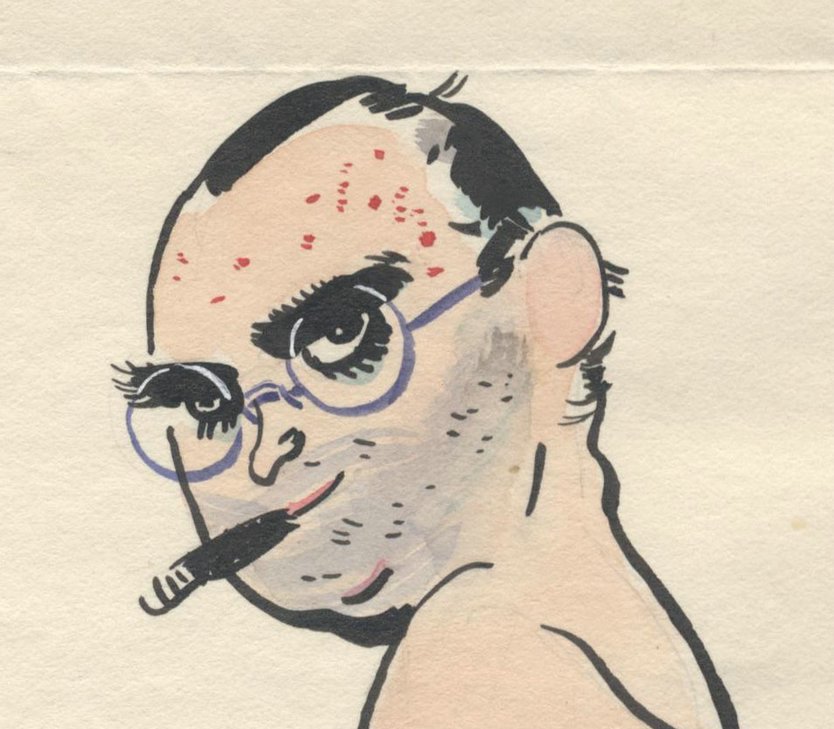
But somewhere along the way, Dorne began to outrun his demons. He seemed startled to find himself capable of a permanent relationship with his fourth wife. After fifteen years of marriage, he said "I am slowly and definitely being convinced that this is it." This self-portrait from Dorne was found among his wife's personal effects after she died:


In the safety of his marriage, even the "hard boiled" Dorne could be reborn as the nubile nymphette from September morn.

Biologists used to wonder why nature invented such a complicated, impractical process as sex, which requires two parties coming together to perpetuate the species. Compared to the asexual reproduction that worked so well for our single-celled ancestors, sex seems highly inefficient. Two separate organisms must overcome many obstacles to find each other and mate. And that's even before you take into consideration the problems caused by that time you showed up late for dinner.


The answer, biologists tell us, is that the parasites and bacteria all around us evolve more rapidly than we do and would soon learn to evade their hosts' immune systems if we did not rearrange our genes with each new generation. By blending ourselves with another person, we force our natural enemies to begin all over again.


The same observation might be made about relationships in general.

When two individuals combine, they have a chance to fill in blind spots and compensate for weaknesses that might otherwise harden during a solitary existence. It is not easy to "rearrange your genes" with another person (as Dorne's first three marriages demonstrate). However, the process can sometimes normalize thoughts and behavior which, if left to grow in isolation, might overtake us like the parasites and bacteria. As Bernard Malamud wrote, "if a man is not careful his own thoughts can poison him."

In the 33 years of his last marriage, Dorne overcame his childhood traumas. He ended up a nationally prominent illustrator, president of the Society of Illustrators and wealthy beyond his wildest dreams. He was an art collector and philanthropist, founder of the Famous Artists School (and then the Famous Writers and Photographers schools, with more than 50,000 students in 55 countries). He was appointed to the President's Committee for the Employment of the Handicapped and devoted substantial time to nurturing young talent. A well deserved happy ending for a very special and powerful man.

Saturday, September 09, 2006

BEN JAROSLAW


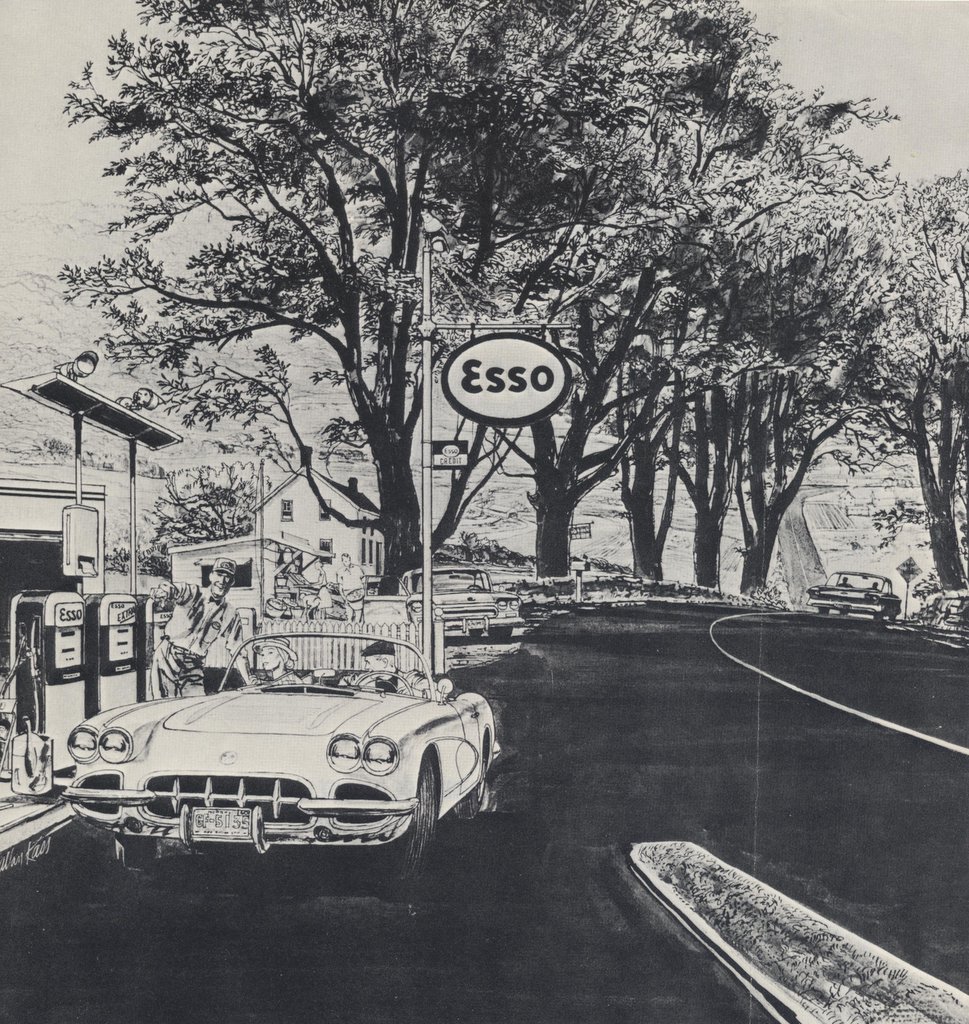
When I was younger (and dumber) I didn't pay much attention to illustrations of cars.  Sure, the illustrators had great skill, but I viewed them as technical specialists rather than true creative artists. If there was ever a subject matter that cried out for photography, it had to be cars.


I began to pay closer attention when I realized that some of the best illustrators of the day-- Austin Briggs, Fred Ludekens and Robert Fawcett-- were doing car illustrations. But my eyes weren't fully opened until the day I heard the illustrator Bernie Fuchs discuss car illustrations the way a poet might rhapsodize about a flower.


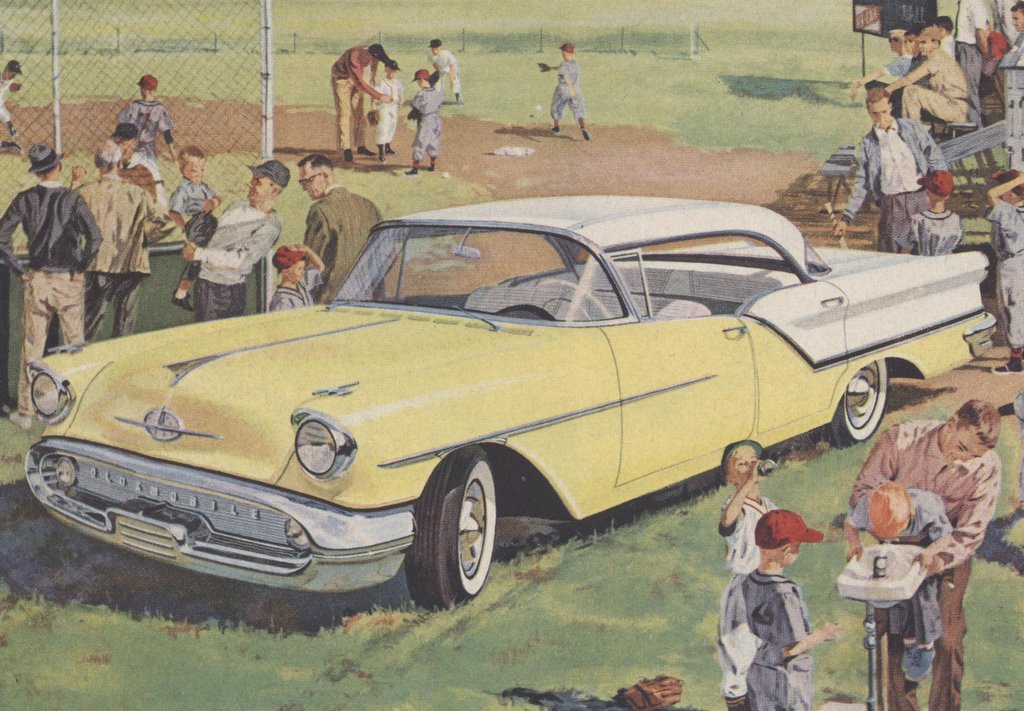
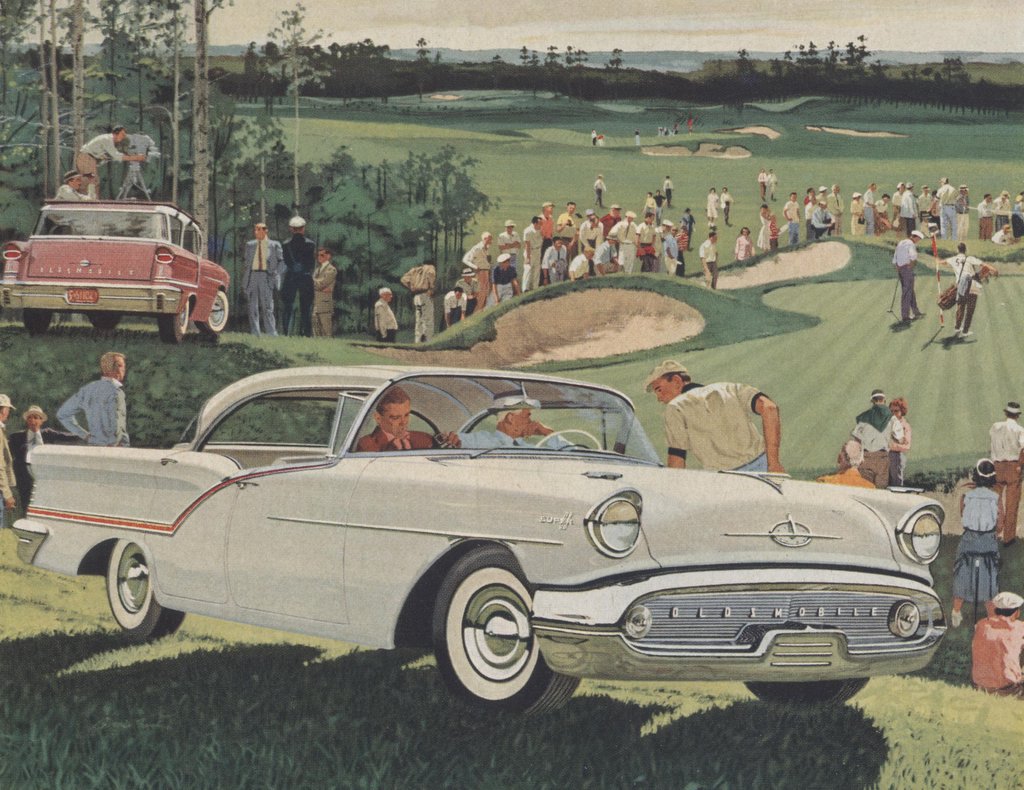
Today Fuchs is famous for his lush, impressionistic paintings, but in the 1950s he worked in a Detroit studio painting car advertisements (including these).  He worked closely with car painters and still holds them in the highest regard. He recalls one car illustrator as "a great observer of light and color" and another illustrator as "terrific at painting values using payne's gray. He was able to create sunsets reflected in the side of a car, or a sky reflected in the hood."


Fuchs reserved special praise for the work of Ben Jaroslaw, the illustrator who worked on the car paintings reproduced here. Fuchs admired Jaroslaw's talent and high standards. He credits Jaroslaw with showing him the ropes and helping him develop into the artist Fuchs later became.


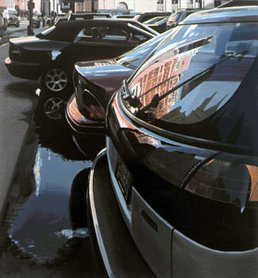
Photography made car illustration obsolete in the 1960s. However, it will not surprise you that many years later, the fine art community suddenly recognized the beauty and abstract qualities of realistic car paintings when "fine" artists such as Richard Estes began painting cars for upscale galleries and museums:


All it took to transform car painting from despised commercial art to revered fine art was to move the picture from the pages of the Saturday Evening Post to the walls of a museum and hang it in an impressive frame. ArtCritical.com does not mention Ben Jaroslaw, but it does heap praise on Estes:

Richard Estes is a god among artists today, with legions of followers acknowledged and unacknowledged, aspiring to his masterly style (and few, if any succeeding) and decades of lofty prices in the commercial market place also attesting to his preeminence.
In my view, Richard Estes is not as talented as Ben Jaroslaw, but Estes became independently wealthy because he had the good sense to package his art properly and sell to a less discriminating market.

Monday, September 04, 2006

FOLDS I LOVE


The world offers unlimited numbers of cool things to draw. Yet, artists seem to have special affection for drawing folds in fabric.


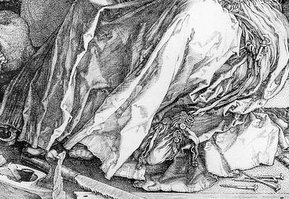
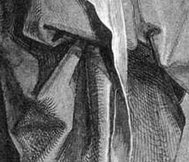
Folds dominate so many pictures, it is clear that artists are fascinated by them. Their complexity, their movement and their abstract quality give artists a lot to play with. Sometimes folds are such fun to draw that artists go a little overboard:


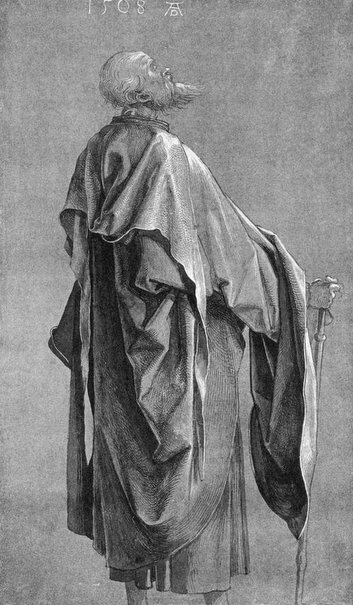
Although folds in cloth have remained basically unchanged through the ages, the artist’s treatment of them has changed dramatically. Folds in medieval art were generally angular, while folds in Renaissance art were rounded. For a contrast between two different cultures, compare the carefully controlled, tightly rendered folds drawn by the great illustrator Durer in 16th century Germany...


...with the lush, spontaneous lines of another great illustrator, Bernie Fuchs, in the U.S. in the 1970s:


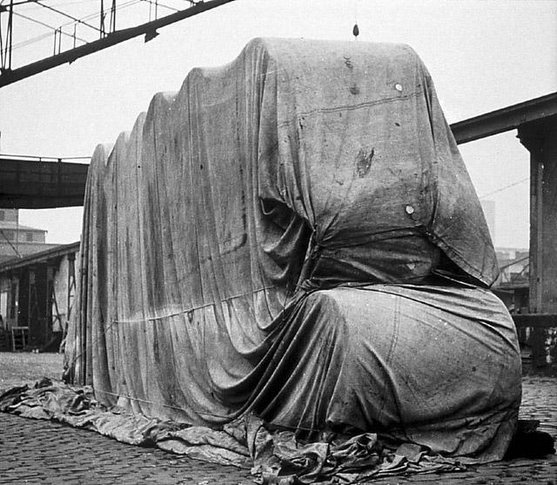
Today, Christo brings the artist's obsession with folds into the modern era with his brilliant wrapped works...


...or his running fence, where fabric stretched and flapped in the breeze:


When Christo wrapped the Reichstag building in Germany, he said:

From the most ancient times to the present, fabric forming folds, pleats and draperies is a significant part of paintings, frescoes, reliefs and sculptures made of wood, stone and bronze. The use of fabric on the Reichstag follows the classical tradition.

By my calculation, there are 8,743,921 absolutely great drawings of folds. When I woke up this morning, the following six were foremost in my mind:


Leonard Starr stoically insisted that writing and drawing his daily comic strip On Stage was "a business" but his pleasure in painting these folds is almost palpable.


Here, Austin Briggs' folds of cloth dominate the outline of the figure.


Any fan of the Godfather knows what Mort Drucker has concealed under these well rendered sheets


Kyle Baker takes a more restrained but very interesting approach to folds


Alex Raymond's bold treatment of the folds in this smoking jacket elbows everything else out of the picture


Finally, one more (very different) approach by Mort Drucker where the folds ran away with the drawing. Talk about a knock out ending!

Thursday, August 31, 2006

STANDARDS


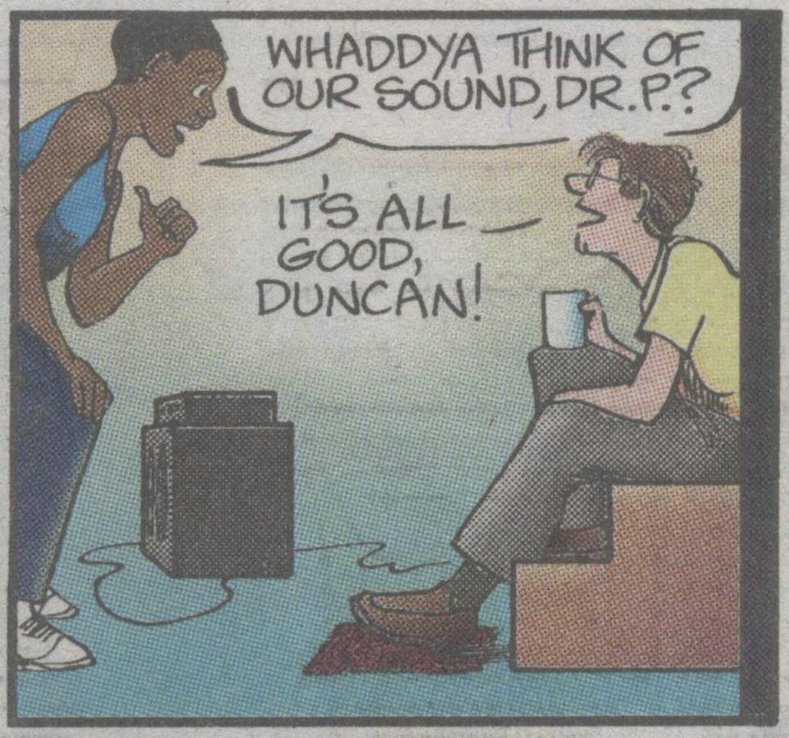
Recently, a column in Editor & Publisher magazine proclaimed that the comic strip For Better or Worse (above) is "the best comic in the 111-year history of the modern newspaper strip." Labeling the creator an "artistic genius," the column argued that For Better or Worse surpasses strips such as Krazy Kat, Little Nemo, Calvin & Hobbes, Peanuts and Terry and the Pirates.


In the LA Times, art dealer Karen de la Carriere asserted that Kinkade, the painter of unmitigated twaddle, "is a modern day Leonardo da Vinci or Monet. There is no one in our generation who can paint like that."


Not to be outdone, the NY Times Magazine pronounced Art Spiegelman the “Michelangelo" of the comic world.

For many years, I thought the only polite response when critics publicly embarrassed themselves was to look the other way, just as you would for someone whose bodily functions got the best of them during a momentary lull at a party.

But when you have a blog like this, you get a lot of traffic from people who insist that everyone is entitled to their own standards, and that taste in art is no different from taste in ice cream. Chocolate, vanilla or strawberry, it's all equally valid. Those people may wish to stop reading now.

There are plenty of reasons for an art critic to be humble. Art means different things to different people. For some it is purely decorative. For others it has religious significance. It can be a form of therapy, a parlour trick, or (in perhaps its highest and best use) a seduction technique. Taste in art changes, so an artist beloved by one generation might fall from grace in the next. Furthermore, wonderful art pops up in unexpected places-- from children, from the mentally ill, from primitive civilizations. In view of all this, who is to say what’s good and bad? If people get genuine pleasure from mediocre art, one has to think twice before telling them they are wrong to do so.


This may explain a recent survey of 230 art critics by Columbia University, which found that passing judgment on art was at the bottom of their list of priorities, while "providing an accurate descriptive account" was at the top. This unwillingness to evaluate quality caused James Elkins, chair of art history at the Art Institute of Chicago, to conclude that art criticism is in a "worldwide crisis" because "contemporary art criticism is entranced by the possibility of avoiding judgment."

In a major essay in the New York Times, Barry Gewen analyzed six art books that survey the state of "fine" art today. Although the books were written from a wide variety of perspectives, they all reached the same grim conclusion: "surveying the trends in modern art leaves one with the sense that we have arrived at the end of something, a state of bewilderment at best, of bankruptcy at worst."

It's a sad ending for a trend that began with such excitement and promise. Nearly 50 years ago, Robert Motherwell wrote:
The emergence of abstract art is a sign that there are still men of feeling in the world .... Nothing as drastic as abstract art could have come into existence save as the consequence of a most profound, relentless, unquenchable need. The need is for felt experience -- intense, immediate direct, subtle, unified, warm, vivid, rhythmic.
But Clement Greenberg, one of the earliest supporters of abstract art, added an important qualification:
The nonrepresentational or abstract, if it is to have aesthetic validity, cannot be arbitrary and accidental, but must stem from obedience to some worthy constraint.
The absence of a worthy constraint-- of standards-- opened the door to artists such as Bob Flanagan, whose art involved nailing his penis to a wooden plank, or Keith Broadwee whose art involved squirting paint from his anus.

One reason I like illustration and comic art is that it is not as susceptible to narcissism and decadence. As Howard Munce once remarked, "the difference between art and illustration is that there are no amateur illustrators." An honest commercial marketplace may not be the ideal source for purpose and value in art, but it will certainly do until a better one comes along.

In the end, I agree with William Blake:
When I tell any truth, it is not for the sake of convincing those who do not know it, but for the sake of defending those who do.
Many of the artists discussed on this blog are gifted artists who held themselves to exacting standards. They paid a high price to develop their art in ways other than nailing their penises to a plank. It is to honor their accomplishment that I stand firm on this spot in cyberspace and insist, "standards are not an illusion."


.

Thursday, August 24, 2006

AHHHHHHH..... NOEL SICKLES

Alex Toth argued that art should be stripped of all gimmicks and pretension:
Simplicity is a great god. Truth. Throw out all the junk. There's a saying which says: "to add to truth subtracts from it." Make it so simple you can't cheat.
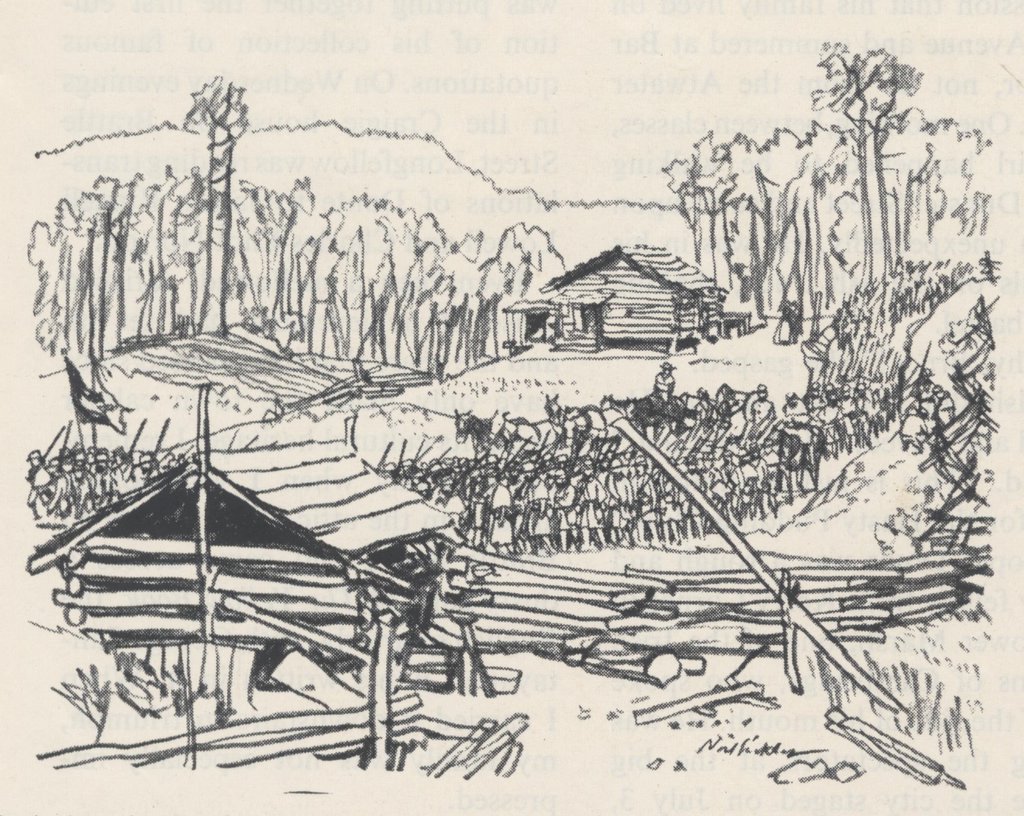
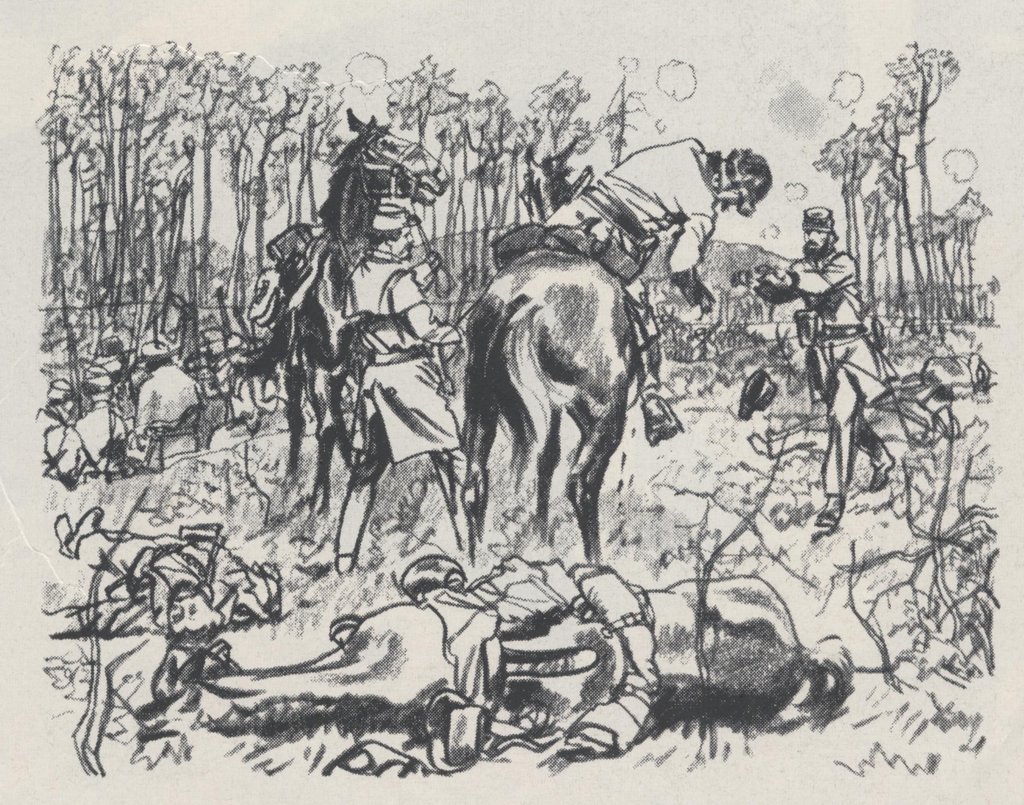
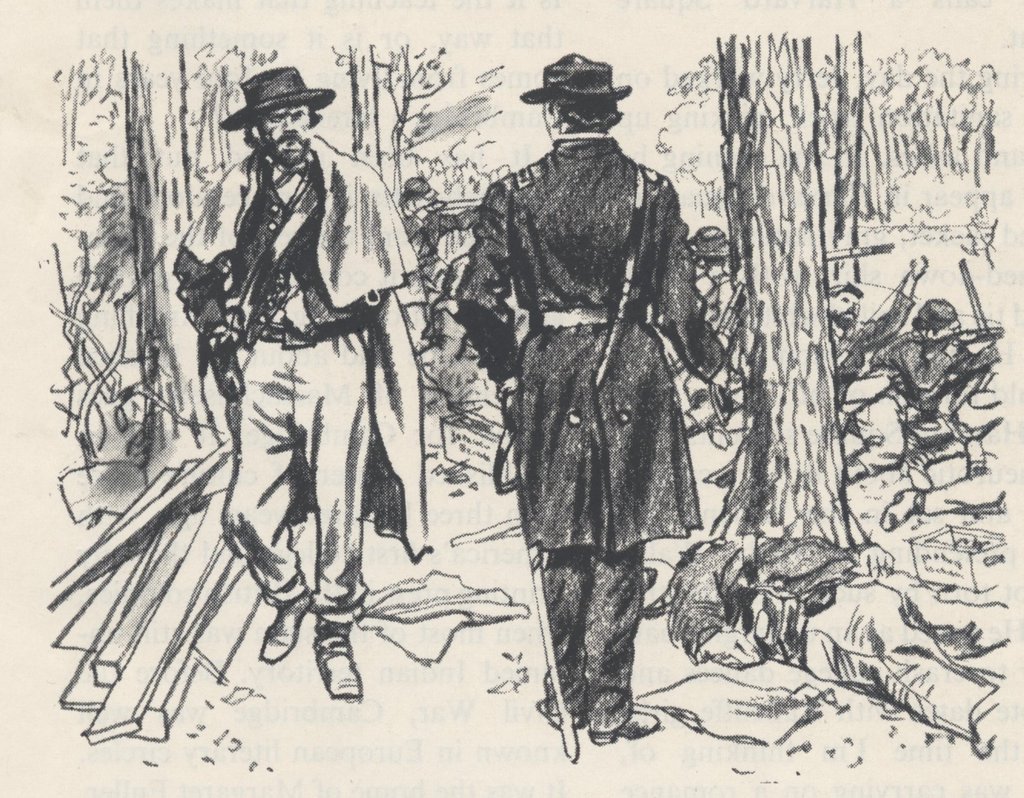
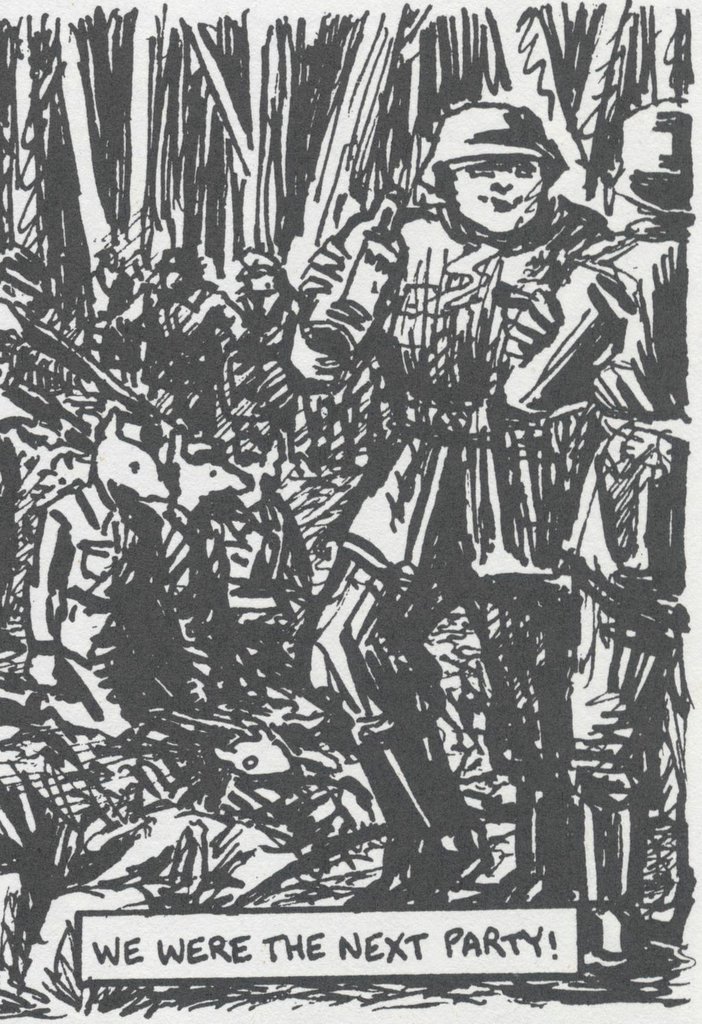
No illustrator of the 20th century drew with more honesty and less pretension than the great Noel Sickles. He was a born draughtsman with an almost supernatural drawing ability. He had no use for pretension.

These stunning Civil War drawings were for an obscure article buried in the middle of a magazine from the 1950s. They were published at approximately the same size as you see them here. They have never been republished nor mentioned as significant examples of Sickles' work. But no matter how humble their size or format, their extraordinary beauty and purity are worth close study today.


This is what I mean when I talk about "drawing."

Friday, August 18, 2006

I LOVES POSSUMS TOO


Why would any artist choose to work in the medium of the comic strip? The pictures are squeezed into tiny boxes where they compete for space with word balloons. The quality of reproduction is usually awful. And for writers, the medium has even less to offer. There is never enough space for words, and the flow of the narrative is chopped into short installments.

For many, these inherent drawbacks prevent comics from ever being a platform for truly excellent art.

But for at least one eccentric group, comics seem to be the best possible medium. Some artists with a strong personality and a talent for both words and images have found that comics allow them the freedom to combine all their strengths and realize their full artistic potential. These include George Herriman (Krazy Kat), Chester Gould (Dick Tracy) and Harold Gray (Little Orphan Annie). These creators could not have achieved the same heights by drawing and writing as two separate disciplines.

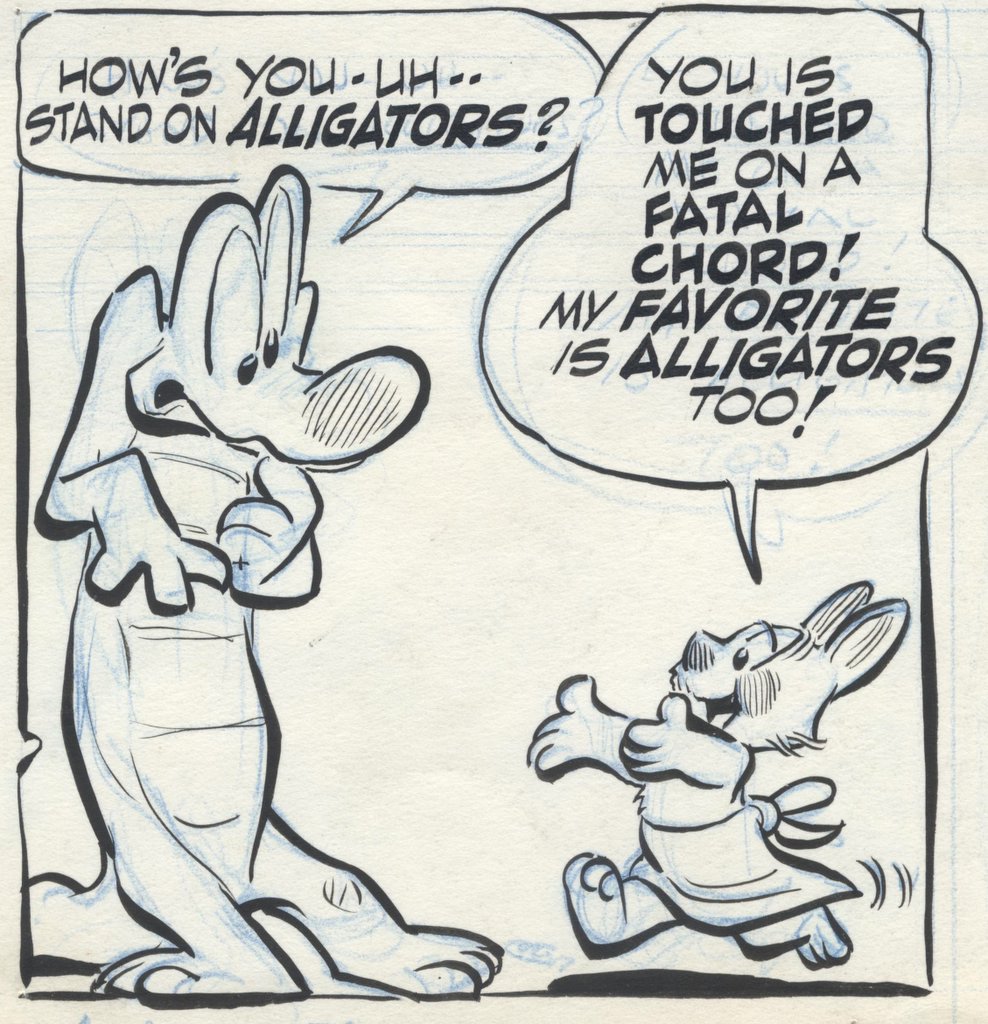
Among the greatest to use the special potential of the medium was Walt Kelly in his comic strip, Pogo.


Kelly starts out as an excellent artist. Note in the picture above how effortlessly he employs his knowledge of anatomy and his expressive line to serve the action in this panel: the raised shoulder, lowered head, splayed fingers and recoiling stance of the alligator are all conveyed with the kind of brush work that has not been seen in comic strips for many decades.

Similarly, in the following picture Kelly quietly understands that feet curve in toward each other:


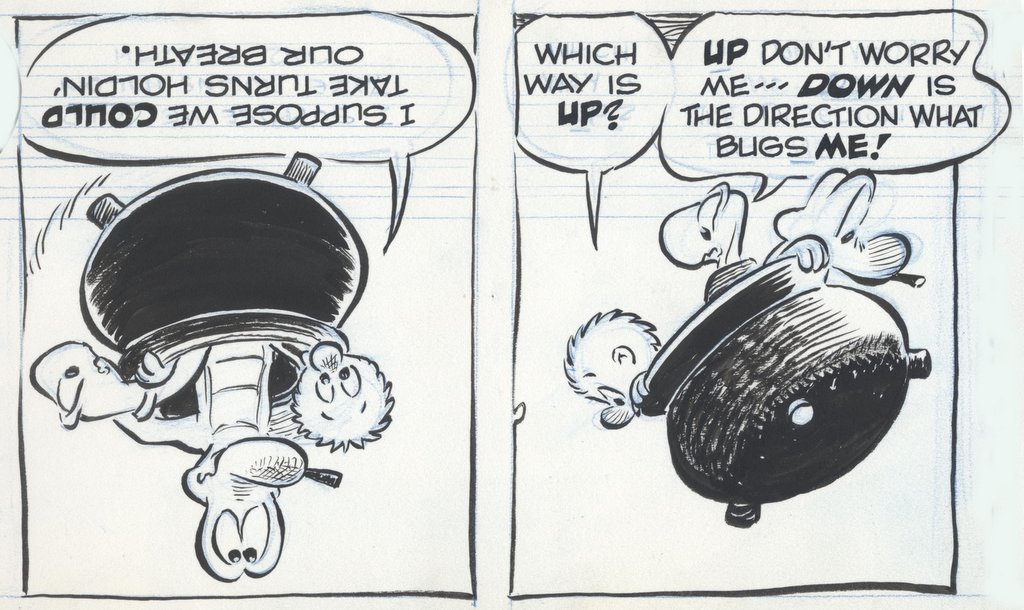
But Kelly was also an excellent writer. Here he combines those drawing skills with his typically clever words:


Kelly could treat words like pictures and pictures like words.


The medium allowed him the freedom to play games and create effects that could never be found in an exclusively literary or visual art form.


Kelly's accomplishment was not just the sum of his drawing and writing. He invested his own distinctive personality and language to create a work that was uniquely his own.


I doubt he could have achieved such greatness in any other medium.

The medium does not suit everyone. Plenty of comic strip artists such as Frank Frazetta or Noel Sickles could not reach their full potential until they were set free from the straightjacket of the comics medium. And there are good writers such as John Updike who gave up drawing comics because they seemed to do better focusing on words alone.

It is easy to get the mixture wrong. Today we seem to have a lot of clever writers such as Art Spiegelman or Chris Ware who cannot draw well, and as a result the quality of the combined work suffers.


Those who were destined to be either an artist or a writer can do good work in comics, but they can never seem to take full advantage of the medium. But for the odd little band of eccentrics such as Kelly, Herriman, Gould and Gray there is no higher art form.